








(2) Reviews | Rate It
I am extremely impressed with your company. This was my second order. It was received unbelievably quickly. Great job!
Debra G
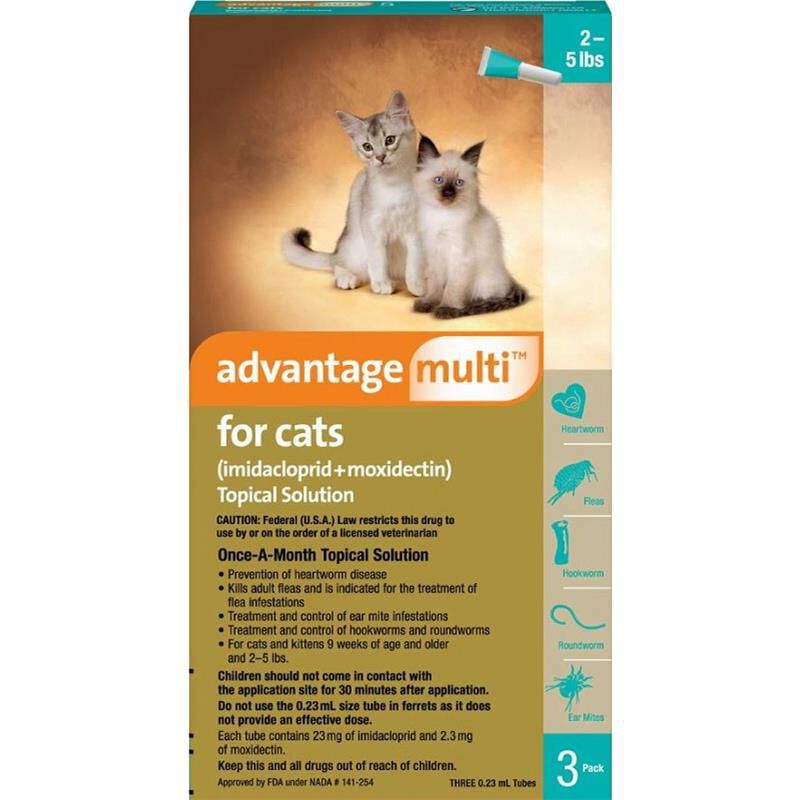
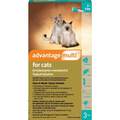
Advantage Multi for Cats
Prevent heartworm disease and control ear mites in cats.
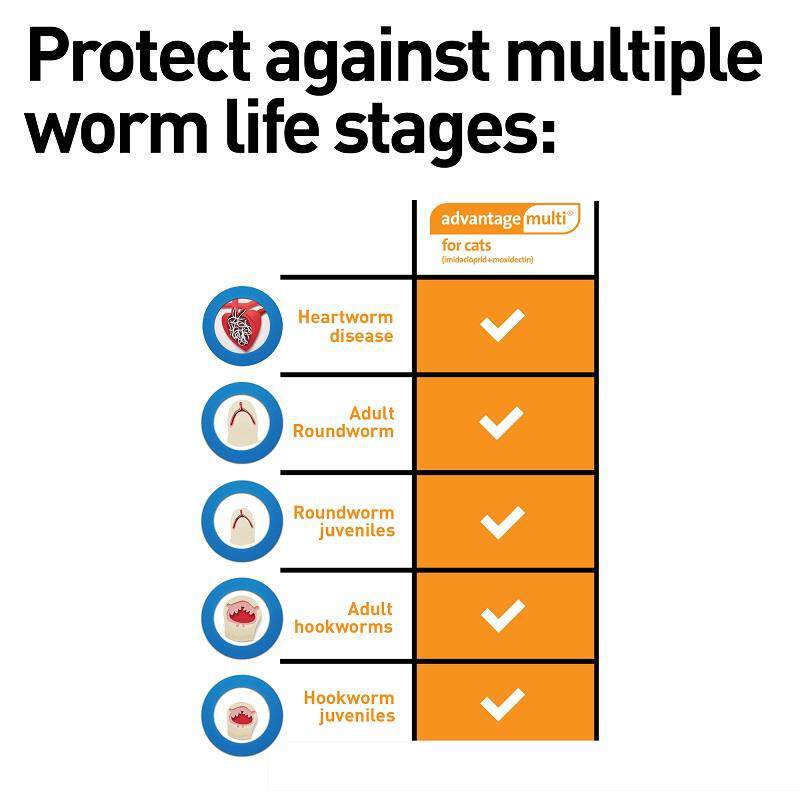
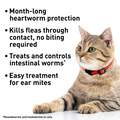
Advantage Multi for Cats is a once a month topical solution used for the prevention of heartworm disease, kill adult fleas, treat flea infestation and treat and control ear mites and intestinal parasites including hookworm and roundworm in cats and kittens 9 weeks of age or older and weighing 2 lbs or more.
Who is it for?
Cats and kittens 9 weeks of age or older and weighing 2 lbs or more.
Why use it?
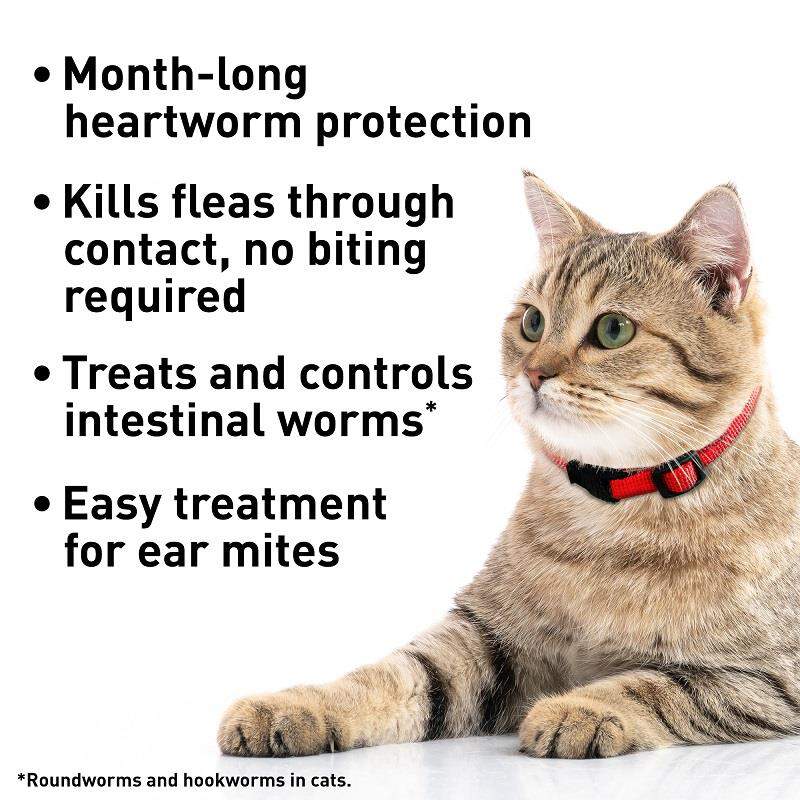
-For the prevention of heartworm disease
-For the treatment and control of fleas infestations
-For the treatment and control of hookworms and roundworms in cats
-For the treatment of FAD (flea allergy dermatitis)
-Used for the treatment and control of ear mites in cats
How it works?
Imidacloprid + moxidectin contains a combination of insecticide and endectocide agents
Manufacturer:
Bayer Animal Health
Active ingredient(s):
imidacloprid + Moxidectin
How is it sold?
Per Package
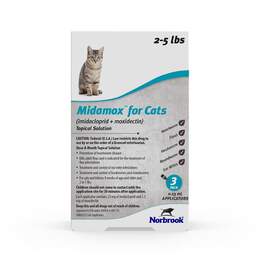
Cats 2-5 lbs
Cats 5-9 lbs
Cats 9-18 lbs
What are the side effects?
Lethargy and prolonged periods of sleep; behavioral changes including agitation,
excessive grooming, hiding, pacing;discomfort at the application site (rubbing,
scratching, etc.); increased salivation within 1 hour of treatment; increased drinking; or coughing. If cat licks the application site, may see increased salivation, tremors, vomiting, and decreased appetite.
What special precautions are there?
-Do not apply to irritated skin
-Avoid oral ingestion. Cats may experience hypersalivation, tremors, vomiting and decreased appetite if Advantage Multi for Cats is inadvertently administered orally or through grooming/licking of the application site.
What to do if overdose?
Consult your nearest animal Hospital
How Can I store it?
Store at temperatures between 4°C (39°F) and 25°C (77°F), avoiding excess heat or cold.
Helpful Tips:
For the first 30 minutes after application:
Ensure that the cat cannot lick the product from application sites on themselves or other treated Cats.
Separate treated Cats from one another and from other pets to reduce the risk of accidental ingestion.
The recommended minimum dose is 4.5 mg/lb (10.0 mg/kg) imidacloprid and 0.45 mg/lb (1.0 mg/kg) moxidectin, once a month, by topical administration.
Do not apply to irritated skin.
1. Remove one dose applicator tube (tube) from the package. As specified in the following table, administer the entire contents of the Advantage Multi® for Cats tube that correctly corresponds with the body weight of the cat. tubes. * Cats over 18 lbs. should be treated with the appropriate combination of Advantage Multi for Cats
2. While holding the tube in an upright position, remove the cap from the tube.
3. Turn the cap over and push the other end of cap onto the tip of the tube.
4. Twist the cap to break the seal and then remove cap from the tube.
5. Part the hair on the back of the cat’s neck at the base of the head, until the skin is visible. Place the tip of the tube on the skin and apply the entire contents directly on the exposed skin. Lift tube away from skin before releasing pressure on tube.
Do not get this product in the cat’s mouth or eyes or allow the cat to lick the application site for 30 minutes. Treatment at the base of the head will minimize the opportunity for ingestion by grooming. In households with multiple pets, keep animals separated to prevent licking of the application site.
Stiff, matted hair or a damp, oily appearance of the hair may be observed at the application site on some cats. This is temporary and does not affect the safety and effectiveness of the product.
Advantage Multi for Cats (10% imidacloprid + 1% moxidectin) is a colorless to yellow ready-to-use solution packaged in single-dose applicator tubes for topical treatment of cats.
Imidacloprid is a chloronicotinyl nitroguanidine insecticide. The chemical name of imidacloprid is 1-[(6-Chloro-3-pyridinyl)methyl]-N-nitro-2-imidazolidinimine. Moxidectin is a semisynthetic macrocyclic lactone endectocide derived from the actinomyceteStreptomycetes cyaneogriseus noncyanogenus. The chemical name of moxidectin is [6R, 23E, 25S(E)]-5-O- Demethyl-28-deoxy-25-(1,3-dimethyl-1-butenyl)-6,28-epoxy-23-(methoxyimino) milbemycin B.
-Fleas are external pests that are capable of fast reproduction, by surviving on your pet’s blood. These tiny insects are brown in color. Although they are wingless they are able to jump reaching incredible heights. Their bodies are compressed, or flattened, from side to side. Their size make them hard to detect and much more difficult to eliminate from your pet or home. A single female flea may produce up to 2,000 eggs over her lifetime. Eggs hatch and can develop into adults within only three weeks. Adult female fleas feed by ingesting blood from your pet and subsequently lay eggs, which drop off your pet’s coat. Within days, larvae hatch from the eggs and live undetected in your pet’s surroundings, such as the carpet, bedding and other protected areas. Flea larvae spin a cocoon, and, when appropriately stimulated, a young adult flea emerges and jumps onto your pet to continue the life cycle.
-The warm and dark environment of your pet’s fur and skin provide the perfect environment and feed for fleas. A little time spent outdoors and pets easily become flea infested. Indoor cats are at risk even if they just go out on the patio. They are also at risk if they share their home with a dog or other cats.
Pets get fleas from other animals- a stray dog or cat, neighbor’s pet, or urban wildlife like opossums and raccoons may have passed through your yard while the female flea is laying eggs and the eggs are left in your pets environment. Those eggs then develop into adults and those fleas jump onto your pet.
-Flea droppings (dark specks) in the fur.
-Flea eggs (white specks) in the fur.
-Excessive licking or scratching.
-Scabs or hot spots on the skin.
-Allergic dermatis
-Hair loss
-Pale Gums
-Tapeworms
The easiest way to find fleas on a cat is to check the belly. You may see the fleas or small dark spots that move if they do not move it is possible you are viewing their droppings, which look like specks of dirt. Excessive scratching and hair loss are also signs that fleas may be feasting on your feline.
Since fleas can consume 15 times their own body weight in blood, they can cause anemia or a significant amount of blood loss over time. This is especially problematic in young puppies, where an inadequate number of red blood cells can be life-threatening to some dogs. Signs of parasitic anemia include pale gums, cold body temperature and listlessness.
Cats
When a cat or dog has a heightened sensitivity to the saliva of fleas, just one bite of a flea can cause an allergic reaction. This condition is known as flea allergy dermatitis and causes intense itching and discomfort for your cat or dog. Signs include generalized hair loss, reddened skin, scabs and hot spots. Flea allergy dermatitis often leads to skin infections.
|
Average Product Rating: ![]() ![]() ![]() ![]() ![]()
(4.5) Based On Reviews |
|
| Showing comments 1-2 of 2 Comments | 1 | |
|
1.
Mrs. Nettie Espinoza on 3/19/2012 said:
![]() ![]() ![]() ![]() ![]() Excellent product!!
(1 people found this comment helpful, 0 did not)
\n");
|
|
|
2.
Anonymous on 3/19/2011 said:
![]() ![]() ![]() ![]() ![]() does it kill ticks to
(0 people found this comment helpful, 1 did not)
\n");
|
-
Buy this product Now and earn rewards points you can redeem and use for your future purchases!
- Learn More

>