
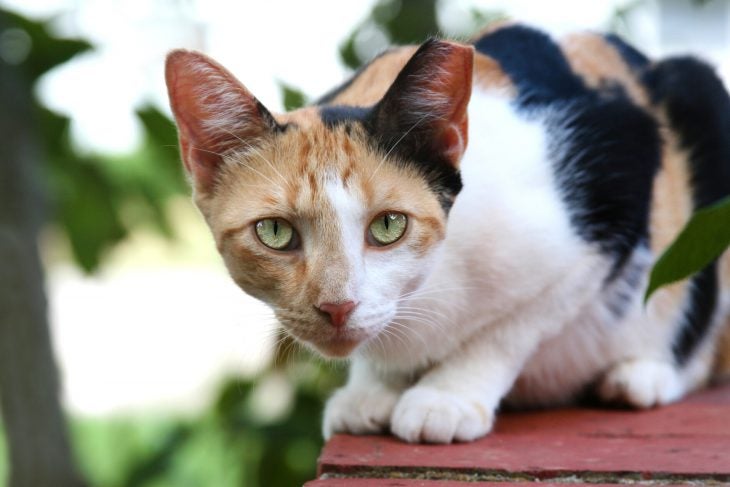
Whether you live in a big city, a suburb, or a rural location, it???s likely that you???ve seen them dashing about, looking for food, or finding respite from the sun by lounging under a car. Collarless cats that have no interest in your attention and that sometimes bear evidence of their last catfight in the form of a scratch or two.
These are feral cats, sometimes called community cats, that typically live in colonies and are not socialized and are, therefore, not suitable for adoption. Love them or hate them???and there are those who feel VERY strongly on both sides of the issue???these cats are part of our natural landscape, and studies have shown that removing them could cause unwanted consequences for the ecosystem.
While some have taken to killing them, either on their own or through city-funded round-them-up-and-euthanize-them programs, there are problems with that method. Even setting aside the moral dilemma of destroying entire populations of cats, the fact is that killing them does nothing to limit their populations in specific areas.
Plus, one location that eradicated their feral cat population saw a not-at-all-surprising spike in the population of rats and mice. Another saw local crops decimated by rabbits whose numbers were no longer reduced by cats.
So what can be done?
More and more locations are realizing the benefits of implementing a TNR (trap-neuter-return) program. With TNR, the cats are humanely trapped, sterilized, vaccinated, and then returned to their outdoor home. The cats are typically ear tipped, so that TNRd cats are easily recognizable. If any cats among them are socialized, they may be placed in foster homes and then adopted to a loving home.
Residents Participating in TNR
It???s not just municipalities participating in TNR programs. Many residents are taking up the task on their own. Groups such as Alley Cat Allies and others send representatives throughout the country to host talks about getting involved.
Some people are interested because they see so many kittens being born (and many dying) and are looking for a humane way to deal with the ever-growing cat population. That???s how Linda got involved.
She noticed a few cats hanging around, and they???d sometimes spend a few hours on her porch. One became pregnant and had four kittens, but only two survived more than a month. After learning that a community of just 12 cats can increase to more than 2,000 in four years and more than 11,000 in 5 years, she knew she wanted to do something.
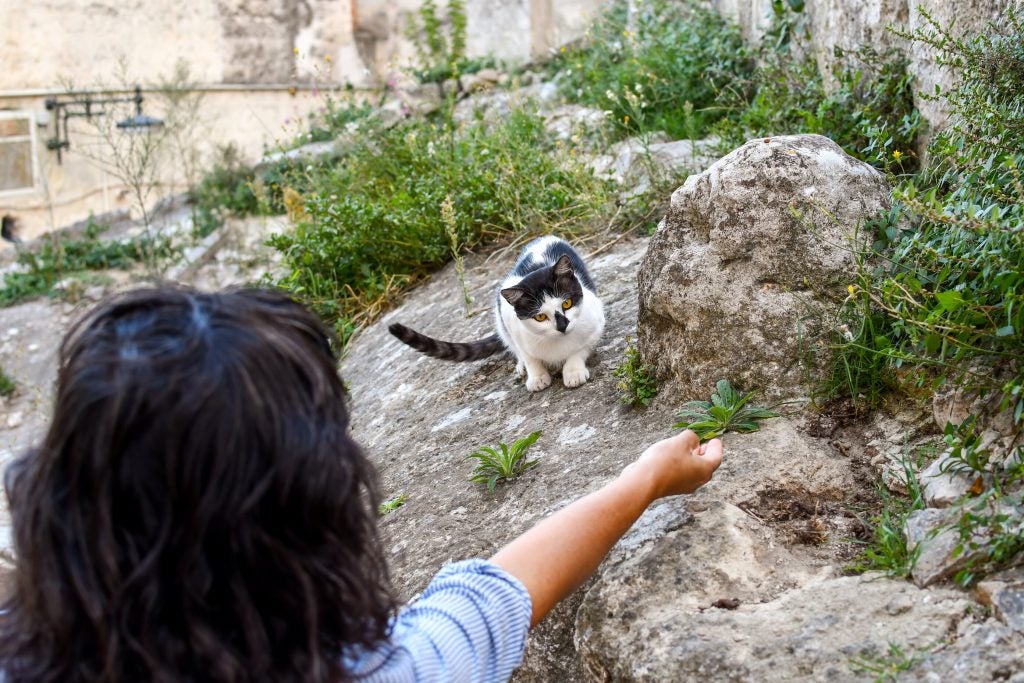
Linda attended a seminar about TNR, and she immediately knew this was the right solution. Over the next few weeks, she trapped all of the cats in the colony (a total of 5), had them sterilized, and returned them to the outdoors.
Five years later, she still feeds those 5 cats, and the population has not grown.
Even for someone who doesn???t care at all about the welfare of cats, this is a smart option.
Here???s why:
The feral cats who live near you do so because they find it to be an appealing option. They defend their area from other cats. If they are gone, other cats will move into the area. If you kill those, too, new cats will move in, creating an ongoing cycle of killing cats WITHOUT ACHIEVING THE RESULTS YOU WANT.
Alternatively, TNR stops the population from growing and prevents other colonies from moving in. It gives you what you want without the fruitless killing.
The benefits for those who DO care about the cats are even greater as TNR is a humane way to help cats continue to live in the home they know (the outdoors) and control population growth.
The Cost of TNR
Some anti-TNR activists claim it???s too expensive, but that claim is false. Data from Hillsborough County Animal Services (HCAS) in Tampa, Florida, showed that it costs $65 per cat to sterilize and vaccinate feral cats as opposed to $168 per cat to pickup, euthanize, and dispose of the animals1.
Before implementing a TNR program in Cook County, Illinois, they were trapping and killing about 600 feral cats a year at a cost of approximately $135 per cat. Their TNR program saved them $1.5 million during its first six years2.
Doing TNR On Your Own
If you have community cats hanging around your neighborhood, you can complete TNR on your own. The process is easier than you might think, but it can seem intimidating. You can find help and guidance in Facebook groups dedicated to TNR. This is a great way to find local people who participate in TNR and will be happy to provide the advice and assistance you need.
Here???s how to get started:
- In order to trap the cats, you???ll need to know where they???ll be at a particular time of day. Feeding them is the best way to accomplish this. Put food out twice a day at the same time.
- When you???re ready to trap, withhold food for 24 hours.
- Place traps near their feeding area with food inside. When the cat enters the trap, it will close automatically.
- It will probably take several trapping attempts to get all of the cats.
- Don???t leave traps unattended, and don???t leave cats in traps outside. As soon as the door closes, cover the trap with a cloth (this helps to calm the cat) and move it to your car or holding area.
- You???ll need to hold the cat until his or her appointment to be spayed or neutered. Depending on where you live, it may take a few days to get an appointment, so be prepared for this wait.
- Drop the cat off at the clinic or vet. Usually, you???ll be able to pick the cat up later that day or the next morning.
- Allow the cat to recover for a few days in a crate in your home for 24 to 48 hours.
- Now the fun part! Once the cat has recovered, he???s ready to be released.
For ongoing care, simply continue to feed twice a day. Set the food out at the same times each day. After 30 minutes or an hour, retrieve the food. This helps to prevent spoilage and other animals from eating the food.
These are only very basic guidelines. If you???d like to participate in TNR, it???s best to find a group near you OR get in touch with a group that advocates for TNR as such group provides detailed information and advice. Below are some links to start with:
NOTE: It???s important to check your municipality???s laws regarding TNR. While more and more locations are open to the practice, there are still some areas where rules prohibit it. If this is the case where you live, contact an organization that advocates for TNR, such as Alley Cat Allies or Neighborhood Cats, to learn what you can do to help change the laws in your area.
TNR is a humane solution to a feral cat problem and, if you???re doing it on your own, you just might make a furry friend or two along the way!
- Hamilton, F. E. Leading and Organizing Social Change for Companion Animals. Anthrozo??s 2010, 23 (3), 277???292.
- County of Cook v. Village of Bridgeview; 2014.