
If you have pets, keeping a pet first aid is an excellent idea. It will ensure you have the things on hand to deal with unexpected situations, such as wounds, your dog ingesting something he shouldn???t, and other issues.
Even if the situation requires a trip to the vet, having a well-stocked pet first aid kit lets you act fast to keep your pet more comfortable until you can get medical attention. For situations that don???t require professional care, such as superficial wounds, you???ll have what you need to prevent infections and encourage healing.
Also, as virtual vet visits become more common, your kit could contain the items recommended during your virtual vet visit.
Below are some of the items to consider for your pet first aid kit.
EMT Gel First Aid Kit in a Tube
EMT Gel for Multi-Species reduces bleeding and supports the healing process for minor wounds. Simply wash the wound and apply. The gel contains collagen, which helps skin heal. It also forms a protective barrier that conforms to any part of the body.
Muzzle
If your pet is injured or sick, he may become aggressive. Having a muzzle on hand ensures your dog can be handled safely, making it easier to administer the treatment he needs or move him and get him to the vet.
Digital Thermometer
A digital thermometer allows you to see if your pet has a fever, which may be asked during a virtual vet consultation. Note: Do not attempt to take your pet???s temperature orally; it must be taken rectally.
Syringes (without needles)
Use syringes to flush wounds or to administer oral medication.
Vetrap Bandages
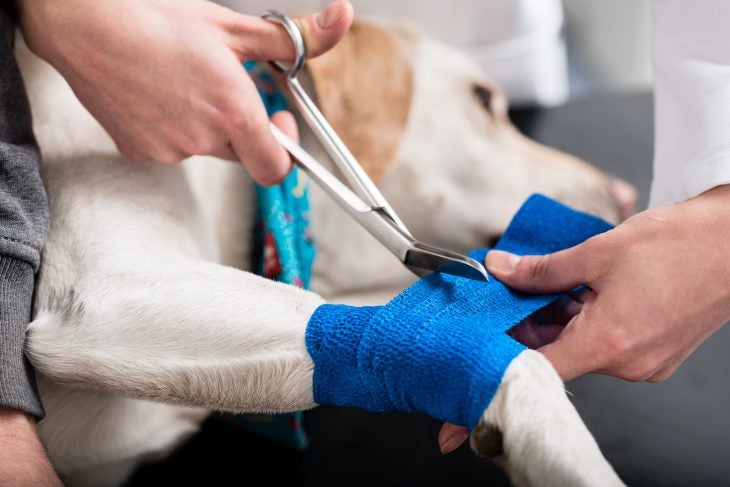
Bandages are a must in any first aid kit, and Vetrap bandages are a quality choice. The flexible, ventilated bandage tape is available in nine colors and does not require pins or clips. They do not stick to hair, and the shape makes it easy to use them even in hard-to-reach areas.
Vetericyn Plus Wound and Skin Care Spray
Vetericyn Plus Wound and Skin Care speeds healing of traumatic wounds, post-surgical incision sites, skin ulcers, chronic inflammation, and burns.
Milk of Magnesia/Activated Charcoal and 3% Hydrogen Peroxide
Milk of Magnesia/Activated Charcoal absorbs poison, and Hydrogen Peroxide induces vomiting. Note: NEVER INDUCE VOMITING OR ADMINISTER MILK OF MAGNESIA/ACTIVATED CHARCOAL EXCEPT ON THE ADVICE OF A POISON CONTROL CENTER OR VETERINARY PROFESSIONAL.
Pet Poison Control/Virtual Vet Care Phone Numbers
When your pet is injured or sick, every minute counts. Keep these phone numbers handy, so you???ll be able to call quickly and get the guidance you need.
Stretcher
A stretcher helps to stabilize and transport your pet without causing further injury.
Copies of Your Pets??? Medical Records
If you go to a medical facility where your pet has not been seen before, having copies of your pet???s vaccine records and other medical history will make the process smoother.
Pet First Aid Book
You might think, ???Why do I need a book? I???ll just look it up online.??? The problem is that you may not always have access to the internet when you need it. Keeping a pet first aid book on hand provides extra peace of mind.
Another essential element of pet first aid isn???t found in a kit; all pet owners should take the time to become versed on at least basic pet first aid and CPR. Classes are available at many Red Cross locations and through other organizations.
Of course, you hope you???ll never need to use your pet first aid kit, but if you do???whether for a minor cut or something more serious???you???ll be glad you took the time to put together the items needed to best care for your pet in an emergency.