
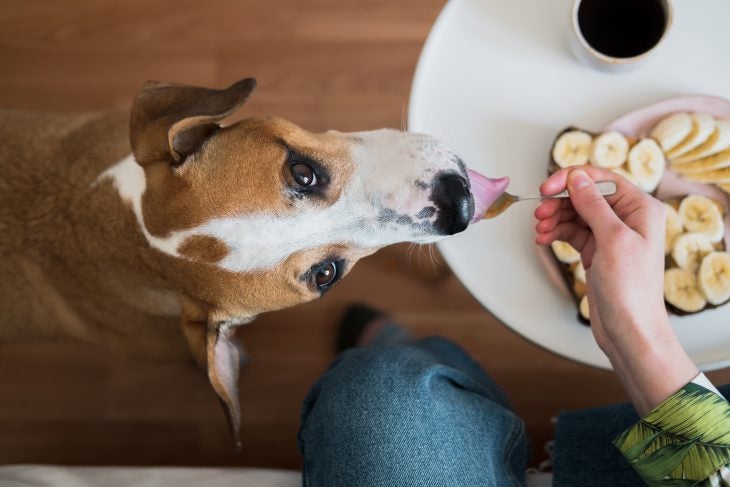
You love giving your dog special treats from time to time???and that probably includes human food slipped to your pooch while you???re enjoying a meal or snack.
Many human foods are safe for dogs, but some are not. Before you slip your dog a treat from your plate, be sure to look up whether or not it could cause health issues for your canine family member.
Here???s a list to help you get started!
Can My Dog Eat???
Fruits
YES! Many fruits are safe for dogs, and giving the occasional piece of fruit is a great way to add variety to your dog???s diet. When giving your dog fruit, prepare it as you would for yourself. For example, don???t give your dog banana peels, apple cores and seeds, watermelon rinds, or pits from peaches.
Safe fruits for dogs include:
- Bananas
- Oranges
- Blueberries
- Strawberries
- Apples
- Watermelon
While these fruits are safe, you should feed in moderation. Fruit should be considered a treat, and all treats should not make up more than 10% of your dog???s total calories.
It???s also a good idea to start by offering a very small amount to make sure your dog doesn???t experience GI upset from a particular fruit.
Fruits that are NOT safe for dogs:
- Grapes
- Raisins
- Tomatoes
- Avocados
Vegetables
YES! While dogs don???t need vegetables the way humans do, adding them to your pet???s diet is fine. If your pet is overweight, you can substitute some of his regular food with low-calorie vegetables. This type of change, however, should be discussed with your veterinarian before implementing.
Safe vegetables for dogs include:
- Carrots
- Sweet Potatoes
- Peas
- Green Beans
- Kale
- Spinach
- Broccoli
- Celery
- Cucumbers
- Butternut Squash
Vegetables that are NOT safe for dogs:
- Onions
- Garlic
- Chives
- Certain Mushrooms
??Chocolate
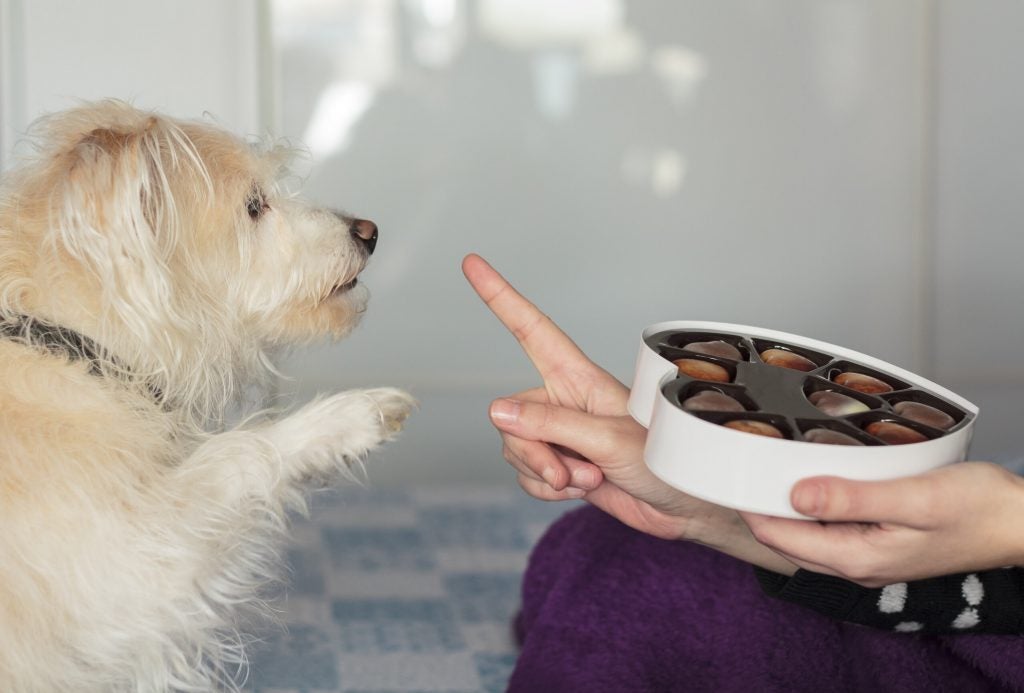
NO! Chocolate is unsafe for dogs and, in rare cases, can even result in death. Chocolate contains theobromine, which dogs cannot effectively metabolize. This results in vomiting, diarrhea, increased thirst, muscle tremors, seizures, and heart failure. While minimal amounts of chocolate will not likely lead to these symptoms, it???s not worth the risk. Chocolate should be avoided.
??Sugar-Free Foods
NO! Many sugar-free foods, such as candy and gum, contain xylitol. Xylitol can cause a fatal drop in blood sugar and can cause kidney failure. This potentially fatal reaction is why it???s so important to keep sugar-free foods out of reach of your dogs and to read labels to ensure xylitol is avoided.
??Peanut Butter
YES! Most dogs love peanut butter, and it???s a great way to give him a special treat. Just be very careful to read the label as some types of peanut butter contain xylitol which, as explained above, can be deadly to dogs.
??Meat
YES! Dogs are carnivores, so of course they can eat meat. In the wild, they hunt prey, but you can feed them chicken, beef, pork, and other meats. You should avoid giving your pet bacon, ham, and other high-fat, high-salt-content meats as they can cause GI upset and, in rare cases, more severe issues such as bloat.
As you can see, there are many types of food you can safely share with your dog. If you???re unsure about the safety of a particular food, or if you notice your pet has GI upset after eating a certain food, talk to your vet about it.
Your dog will love getting fruits, veggies, and other special treats, and you???ll love knowing you???re giving them snacks that are safe and healthy.