
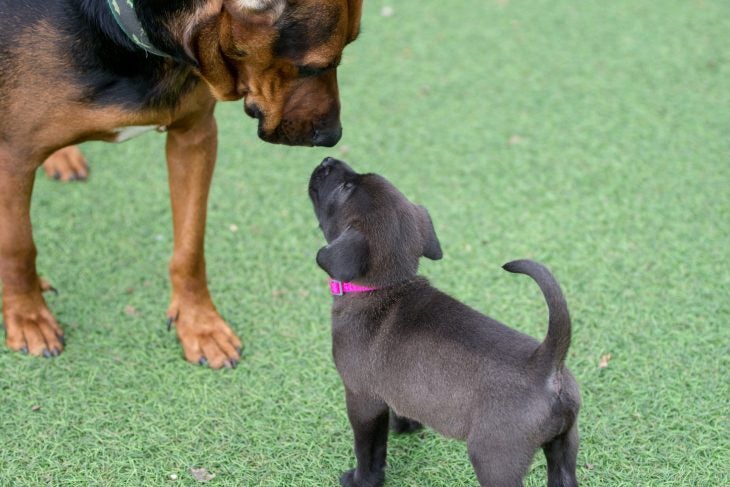
Veterinarian Shelby Neely gives advice about introducing your dog to a new pet.
Many pet parents with only one pet want to add another. Bringing a new pet home is an exciting time for you, but it may not be quite so exciting for your current dog. It is important to have a proper introduction, whether the new pet is another dog, a cat, or a smaller pet. Read on to learn how to help your dog adjust to a new housemate and keep harmony in your home.
Prepare Your Dog for the New Arrival
Before you even bring your new pet home, there are things you can do to prepare. If your dog hasn’t been around many other dogs before, take walks and stop to greet strangers. Spend time at the dog park. Invite a friend’s dog over for a play date. If you have access to them, slowly expose your dog to items such as the new pet’s bedding, toys, or carrier to let them become familiar with the new smells in advance.
Initial Introduction: Neutral Territory
When it’s time for the actual introduction, select a neutral location where your current dog doesn’t feel territorial. If the new pet is a dog, a park or a friend’s backyard would be suitable. Keep both dogs on a leash initially.
If it’s a cat, choose one room in your home for the kitty and put a baby gate at the entrance to the room. If that’s not possible, keep the cat in a carrier. During the first meeting, don’t allow your dog to chase or overwhelm your new cat.
Monitor Body Language
Body language can tell you so much about how the introduction is going. Watch for raised hackles, growling, or stiff body posture. That indicates stress or aggression. Positive body language includes relaxed tails, soft facial expressions, and curiosity without tension.
If either pet seems anxious or uncomfortable, taking a step back is essential. Separate them and try again later when they’re calmer. Rushing the introduction can lead to fear or aggressive behaviors that may take longer to undo.
Positive Reinforcement and Gradual Interaction
It is essential to provide positive reinforcement during the process. Give your dog treats and praise. If the new pet is a dog and things are going well, allow short periods of interaction and play while you supervise. Gradually allow longer periods while continuing to reward with treats and praise.
If your new pet is a cat, you need to let the cat be in charge. Cats, by nature, need a longer period of time to get used to being around a new dog. Keep initial meetings short and gradually increase the amount of time they spend in the same room, always ensuring your cat has a safe escape route.
Establish Separate Spaces
In the early phase, both pets must have their own space to retreat to. This could be a crate, bed, or separate room for dogs. Cats need high places to jump to. They like to look down from above and observe without feeling threatened. Keeping food, water, and litter boxes in separate areas can help prevent any territorial disputes and give each pet some personal space.
Supervised Time Together?????????? ?? ?? ?? ?? ?? ?? ?? ?? ?? ?? ?? ?? ?? ?? ?? ?? ?? ?? ?? ?? ?? ?? ?? ?? ?? ?? ?? ?? ????
Always supervise interactions between the new pet and your dog for at least the first few weeks. This helps prevent conflicts or lets you address them right away. As the pets become more comfortable with each other, you can introduce unsupervised interactions; you must be sure that both animals are relaxed.
Patience is Essential
Every animal adjusts at its own pace. Some dogs may quickly bond with a new pet, while others take weeks or even months to fully accept their new companion. Be patient, keep sessions positive, and don’t rush the process. A gradual and calm introduction increases the chances of building a strong and peaceful bond between your dog and their new friend.
??
??Dr. Shelby Neely??is a Penn graduate who works for Banfield Pet Hospital. When she???s not treating pets, she also works as a freelance writer.?? Before joining Banfield, Dr. Neely owned??a very successful feline-only practice.?? She was also the creator and??author of the award-winning??Ask The Cat Doctor??website.?? Dr. Neely considers her three successful children and her veterinary career her??most significant achievements.?? She lives in King of Prussia with her two adorable cats and loves to visit her four granddogs.