
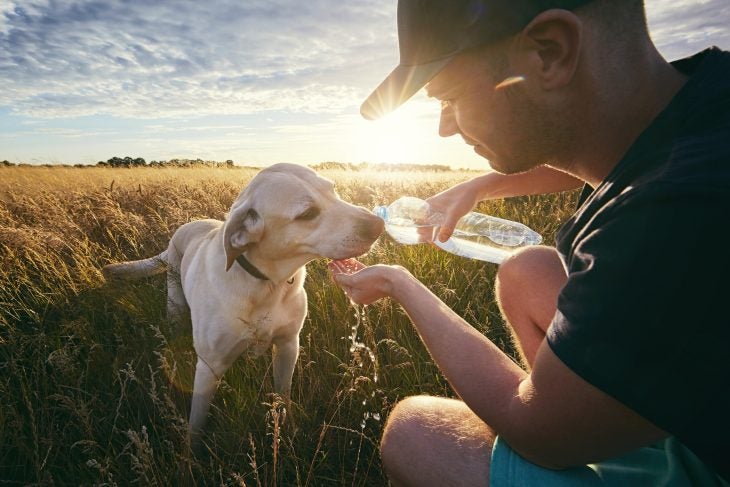
Veterinarian Shelby Neely explains the signs of heat stroke in pets and offers tips to keep your pet safe on hot summer days.??
During the dog days of summer, it’s important to talk about heat stroke in pets. Unlike humans, who help cool themselves by sweating, pets have a very limited ability to sweat. Dogs pant and cats groom themselves and look for a cool spot. As pet parents, we need to make sure cool spots are available and take other prevention actions.
What is Heat Stroke in Pets?
Heat stroke can occur when a pet’s body temperature rises above 104 degrees (40 Celsius). ??Their health is at risk because internal organs can be damaged, and this can even lead to death. Those most at risk from heat stroke are puppies, older pets, pets with health conditions, pets with short noses, and pets with thick fur.
Signs your Pet May Be Experiencing Heat Stroke
It’s essential to know the signs of heat stroke so you can intervene.
Symptoms of heat stroke include:
- Excessive panting
- Trouble breathing
- Collapse
- Seizures
- Increased heart rate
- Either excessively red or pale gums
- Drooling
- Weakness
- Lethargy
- Vomiting or diarrhea
If your pet shows any of these symptoms in hot weather, to take immediate action.
Action to Take in a Heat Stroke Emergency
If you are concerned about heat stroke, follow these tips:
- Get your pet into a cool area immediately.
- Use cool water to wet your pet’s head, neck, and chest. Do not use cold water or ice.
- Offer cool water, but do not force your pet to drink.
- Contact your veterinarian immediately.
How to Prevent Heat Stroke in Pets
Fortunately, you can take steps to prevent heat stroke:
- Always provide fresh, clean water.
- During the hottest time of the day, keep your pets indoors. Use air conditioning, fans, or cooling mats.
- Don’t let your pet walk on hot surfaces. Walk during the cooler parts of the day and walk on grassy surfaces.
- Never, ever leave your pet in the car. It’s not safe, even with the windows cracked.
- Limit exercise.
- Regular grooming can remove excess fur. However, don’t shave your pet because that can actually lead to sunburn.
- Be particularly careful on humid days. High humidity can hinder your pet’s ability to pant.
- Be extra cautious with puppies, older pets, pets with health conditions, pets with short noses, and pets with thick fur.
You Can Prevent Heat Stroke
Preventing heat stroke is possible but requires extra effort and preventative measures. Follow these tips and when in doubt, contact your veterinarian.
Dr. Shelby Neely??is a Penn graduate who works for Banfield Pet Hospital. When she???s not treating pets, she also works as a freelance writer.?? Before joining Banfield, Dr. Neely owned??a very successful feline-only practice.?? She was also the creator and??author of the award-winning??Ask The Cat Doctor??website.?? Dr. Neely considers her three successful children and her veterinary career her??most significant achievements.?? She lives in King of Prussia with her two adorable cats and loves to visit her four granddogs.