
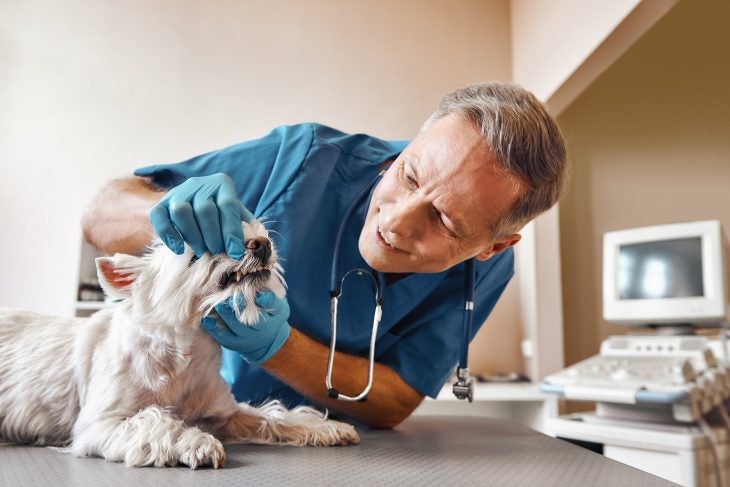
Veterinarian Shelby Neely explains the importance of pet dental health and what to expect when your pet has a professional dental cleaning.??
Vets often stress the importance of dental and oral health and the need for professional cleanings. Dental disease affects animals starting as early as three years of age. More than 80% of dogs and up to 90% of cats show some signs of dental disease. While at-home care is an important part of maintaining your pet???s dental health, professional cleanings are also vital.
Have you ever wondered what a proper cleaning looks like or what occurs at the vet during a dental procedure? In this article, we???ll cover the main steps of routine dental cleanings and some ways you can improve oral wellness at home.
Some pets are not good candidates for professional dental cleanings due to age or medical conditions. Teeth-cleaning toys and dental treats can be especially helpful in animals too elderly or sick to undergo anesthesia.
Professional Cleanings Are Necessary
Even humans, as skilled and health-conscious as we are, must resort to regular professional cleanings. It is recommended that people go to the dentist every six months, so why should it be any different for animals? A year is enough time for plague buildup, leading to conditions like gingivitis and even periodontitis. Left untreated, these conditions can lead to further infections and even organ damage. At-home care is also absolutely critical but cannot be relied on alone. Ensure you consult a veterinarian to establish a proper routine and identify the right strategies to protect against plaque and bacteria.
The Stages of Professional Cleanings
Dentals actually involve quite a few steps as they require anesthesia and pre-op bloodwork and exams. Especially if this is the first time your pet has undergone a dental, the pre-op may be more involved than that for future cleanings. Most often, a cleaning is broken down into the following steps:
1.Pre-Anesthetic Exam and Bloodwork
Your veterinarian will conduct a pre-op physical and blood work panel to ensure your pet can safely undergo anesthesia. If complications are found, the anesthesia plan may be adjusted, or the procedure may be canceled altogether. Sometimes, these exams occur a day or two before the dental.
2. Anesthesia
After your vet has completed the physical and cleared the patient, they???ll sedate your pet and begin general anesthesia. This allows the operation to occur smoothly and painlessly. In healthy and young pets, minimal risk and no permanent effect are involved.
3. Oral Exam
The first step is to examine your pet???s mouth for signs of tooth decay, gum disease, infections, or abscesses. This occasionally includes X-rays to assess the roots and jaw bone.
4. Scaling and Polishing
After your vet has a clear picture of your pet???s oral health, they will begin to clean plaque and tartar from the teeth with the same tools your dentist would use. Professionals call this scaling, and it???s the vital step to protecting against tooth decay and disease. Finally, your vet will polish and brush your pet???s teeth before moving on to the next phase.
5. Necessary Extractions and Treatments
The final step in the dental procedure is removing damaged or diseased teeth and treating any other identified issues. This can include applying fluoride, additional polishing, or antibiotics.
Post-Op
Your vet will monitor your pet for a few hours after the procedure to ensure there are no complications from the anesthesia and that your pet regains consciousness. They may assign you special care instructions, such as dietary restrictions, pain meds or antibiotics, and at-home cleaning strategies.
Preventing the Need for Frequent Dental Cleanings
Diligent at-home care can cut down on the frequency of professional cleanings. Many pet owners use specialized treats like NaturVet Gum and Breath Tablets or Minties Dental Treats to combat plaque and stinky breath. Both are all-natural and include parsley and other ingredients to freshen breath. Chewables by OraVet and Dentees are another popular choice due to their ease of use and strength. These chews provide a barrier against plaque and bacteria while promoting gum health. Finally, VetriSciencePerio Support can be sprinkled directly onto your pet???s meal for finicky animals. It contains probiotics and natural zeolites that reduce plaque and increase oral health.
A Healthy Mouth Leads to a Healthier Life
Dental care is essential to ensure wellness and thriving for your furry friend, whether you have a feline or canine, kitten, or old dog. For best results, combine the professional care of a veterinarian with the at-home comfort of toys and treats. Always consult with a professional before adding or removing any ingredients from diets or new medications. Age, breed, and size all affect which options and procedures are best suited to your companion.
Dr. Shelby Neely??is a Penn graduate who works for Banfield Pet Hospital. When she???s not treating pets, she also works as a freelance writer.?? Before joining Banfield, Dr. Neely owned??a very successful feline-only practice.?? She was also the creator and??author of the award-winning??Ask The Cat Doctor??website.?? Dr. Neely considers her three successful children and her veterinary career her??most significant achievements.?? She lives in King of Prussia with her two adorable cats and loves to visit her four granddogs.