

Tick season is shaping up to be especially severe this year, creating increased risks for both people and pets across the country. Experts point to warmer winters, expanding wildlife populations, and favorable environmental conditions that allow ticks to survive longer and spread more aggressively than usual. That’s why vet-recommended tick prevention is especially important right now.
Concerns about an especially active tick season aren???t just anecdotal. According to a recent PBS NewsHour report*, doctors and researchers are already seeing unusually high tick activity and growing concern over tick-borne illnesses this year. Some experts warn that this could become one of the worst tick seasons in recent memory.
For pet owners, that means prevention is more important than ever. Ticks can transmit dangerous diseases such as Lyme disease, ehrlichiosis, anaplasmosis, and Rocky Mountain spotted fever to dogs and cats ??? often before symptoms become obvious. Staying proactive with flea and tick prevention, routine checks, and yard maintenance can help protect your pets throughout the season.

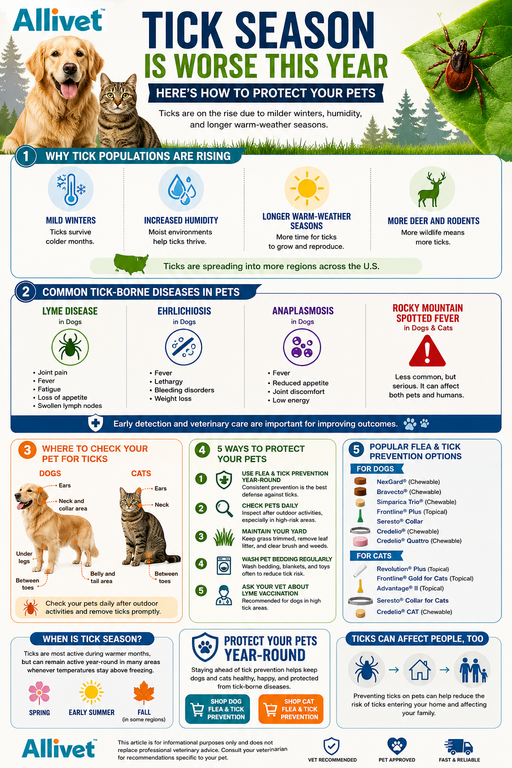
Why Tick Activity Is Increasing
Several environmental factors can contribute to higher tick populations, including:
- Mild winters
- Increased humidity
- Longer warm-weather seasons
- Expanding wildlife populations such as deer and rodents
Ticks are also appearing in regions where they were previously less common, increasing the importance of year-round flea and tick prevention for pets.
Because ticks thrive in grassy, wooded, and brush-heavy environments, pets that spend time outdoors may face greater exposure during spring, summer, and early fall.
Tick-Borne Diseases in Dogs and Cats
Ticks can transmit several diseases that affect pets, including:
Lyme Disease in Dogs
Lyme disease is one of the most well-known tick-borne illnesses in dogs. Symptoms may include:
- Fever
- Joint pain
- Fatigue
- Loss of appetite
- Swollen lymph nodes
Ehrlichiosis
This disease may cause:
- Fever
- Lethargy
- Bleeding disorders
- Weight loss
Anaplasmosis
Pets infected with anaplasmosis may experience:
- Fever
- Reduced appetite
- Joint discomfort
- Low energy
Rocky Mountain Spotted Fever
Although less common, this serious disease can affect both dogs and humans and may require immediate treatment.
Early detection and veterinary care are important for improving outcomes in pets affected by tick-borne illnesses.
How Pets Can Bring Ticks Indoors
Dogs and outdoor cats can pick up ticks during walks, hikes, trips to the park, or time spent in the backyard. Once attached to a pet???s fur, ticks can be carried into the home before being discovered.
Even indoor pets may occasionally be exposed if ticks enter the home on clothing, shoes, or other pets.
Routine grooming and regular tick checks can help reduce the risk of ticks attaching and spreading indoors.
Best Tick Prevention Tips for Dogs and Cats
1. Use Year-Round Flea and Tick Prevention
Consistent flea and tick prevention is one of the most effective ways to protect pets from tick bites and tick-borne diseases.
Pet owners can choose from several veterinarian-recommended options, including:
- Oral flea and tick medications
- Topical flea and tick treatments
- Tick collars for dogs and cats
- Monthly prescription preventatives
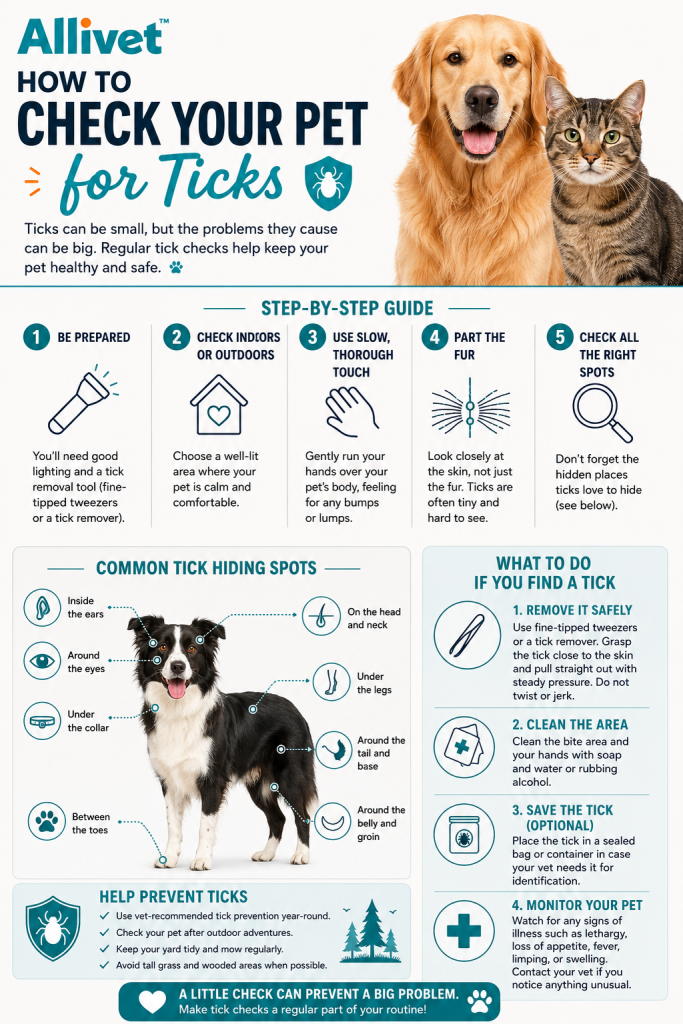
2. Check Pets for Ticks Daily
After outdoor activity, inspect pets carefully, especially around:
- Ears
- Neck and collar area
- Between toes
- Under legs
- Belly and tail area
Removing ticks promptly may help reduce the risk of disease transmission.
3. Maintain Your Yard
Ticks prefer shaded and overgrown areas. To help reduce tick habitats:
- Keep grass trimmed
- Remove leaf litter
- Clear brush and weeds
- Create barriers between wooded areas and lawns
4. Wash Pet Bedding Regularly
Frequent washing of bedding, blankets, and soft toys can help reduce the risk of ticks remaining inside the home.
5. Ask Your Veterinarian About Lyme Disease Vaccination
In some areas, veterinarians may recommend Lyme vaccination for dogs that spend significant time outdoors or live in regions with high tick populations.
Recommended Flea & Tick Products for Dogs and Cats
Pet owners should talk with their veterinarian about the best flea and tick prevention option for their pet???s age, lifestyle, and health needs.
At Allivet, we carry many of the top veterinarian-recommended flea and tick preventatives for both dogs and cats, including oral medications, topical treatments, and flea & tick collars.
Shop:
We carry all the popular preventatives, including Simparica Trio and many more, including:
For Dogs
- NexGard
- Bravecto
- Frontline Plus
- Seresto Collar
- Credelio
- Credelio Quattro
For Cats
- Revolution Plus
- Frontline Gold for Cats
- Advantage II
- Seresto Collar for Cats
- Credelio CAT
When Is Tick Season?
While ticks are most active during warmer months, many veterinarians now recommend year-round flea and tick prevention because ticks can remain active whenever temperatures stay above freezing.
Peak tick activity often occurs during:
- Spring
- Early summer
- Fall in some regions
Because tick exposure can happen almost anywhere outdoors, prevention should remain consistent throughout the year.
Protect Your Pets from Tick-Borne Diseases
Tick season can create serious health risks for pets, but proactive prevention can make a major difference. Regular tick checks, maintaining your outdoor spaces, and using trusted flea and tick prevention products can help keep dogs and cats protected year-round.
Staying ahead of tick prevention is one of the best ways to support your pet???s long-term health and comfort.
This article is for informational purposes only and does not replace professional veterinary advice. Consult your veterinarian for recommendations specific to your pet.
Frequently Asked Questions About Tick Season and Pet Protection
When is tick season for dogs and cats?
Tick season is typically most active during spring, early summer, and fall. However, ticks can remain active year-round in many areas whenever temperatures stay above freezing, which is why veterinarians often recommend year-round flea and tick prevention for pets.
Can indoor cats and dogs get ticks?
Yes. Even indoor pets can be exposed to ticks if they are carried indoors on clothing, shoes, other pets, or through open doors and windows. Outdoor pets are at greater risk, but indoor pets are not completely protected from tick exposure.
What are the signs of tick-borne disease in dogs?
Symptoms can vary depending on the disease but may include:
- Fever
- Lethargy
- Joint pain or limping
- Loss of appetite
- Swollen lymph nodes
- Low energy
If your dog shows symptoms after a tick bite, contact your veterinarian promptly.
How can I check my pet for ticks?
After outdoor activities, inspect your pet carefully around:
- Ears
- Neck and collar area
- Between the toes
- Under the legs
- Belly and tail area
Prompt tick removal may help reduce the risk of disease transmission.
What is the best flea and tick prevention for dogs and cats?
The best flea and tick prevention depends on your pet???s age, health, and lifestyle. Common veterinarian-recommended options include:
- Oral flea and tick medications
- Topical treatments
- Tick collars
- Monthly prescription preventatives
Talk with your veterinarian about the most appropriate protection plan for your pet.
Do dogs need flea and tick prevention year-round?
Many veterinarians recommend year-round flea and tick prevention because ticks can remain active during mild winters and warmer temperatures. Consistent prevention helps reduce the risk of tick bites and tick-borne diseases throughout the year.
Can ticks spread diseases to humans?
Yes. Some ticks can carry diseases that affect both pets and people, including Lyme disease and Rocky Mountain spotted fever. Preventing ticks on pets may also help reduce tick exposure inside the home.
How can I reduce ticks in my yard?
To help make your yard less attractive to ticks:
- Keep grass trimmed
- Remove leaf litter
- Clear weeds and brush
- Create barriers between wooded areas and lawns
Maintaining outdoor spaces can help lower tick populations around your home.
*Source: PBS NewsHour ??? U.S. doctors warn of a potentially bad year for tick-borne diseases
This article is for informational purposes only and does not replace professional veterinary advice. Consult your veterinarian for recommendations specific to your pet.