
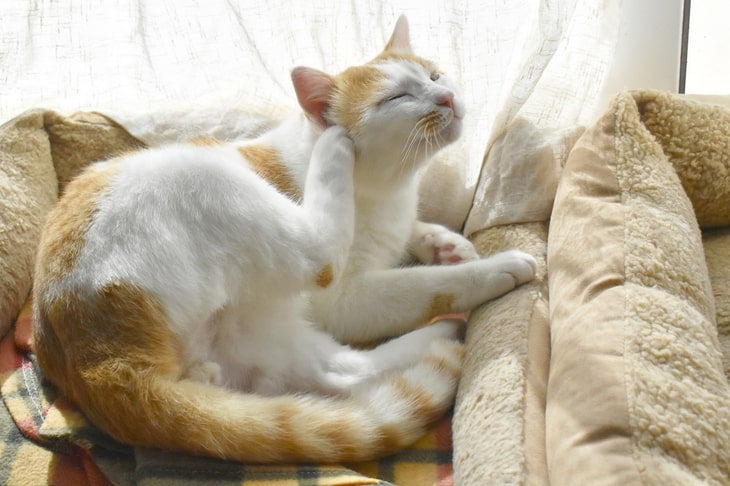
Even thinking about fleas makes most people feel uncomfortably itchy, and when we see our pets incessantly scratching, we immediately look for ways to rid them of the tiny pests. Fleas will happily make their home in your cat’s fur and start to make a meal of their blood. These bites are painful in their own right, but worse, the flea saliva irritates their skin, and that’s why they start to scratch.
When cats become infested with fleas, they can suffer hair loss, and their skin can become inflamed due to an allergic reaction to the flea saliva. Flea-infested cats can also become anemic or sick from diseases fleas transmit, such as Bartonellosis (cat scratch fever) or tapeworms.
To prevent all this pain and suffering and keep your cat healthy and happy, you need to get rid of the fleas as quickly as possible. Flea control for cats comes in many forms, from flea collars to chewable tablets to topicals applied to their fur. These products kill fleas in various life stages, stopping an infestation in its tracks and preventing future infestations from occurring.
Flea Lifecycle
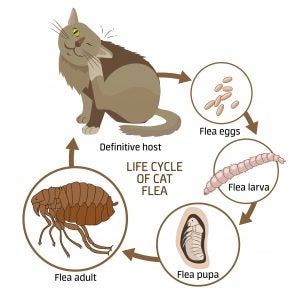
To understand how easy it is for a flea infestation to happen, it helps to know a little about the flea lifecycle. Learning more about these life stages will also help you choose flea & tick control for cats since the products may target different flea life stages.
Egg Stage
The female flea lays white, roundish eggs that readily fall off the host into their environment ??? soil, carpet, floorboards, bedding, and floorboards. The egg can hatch anywhere from 2 days or a few weeks, depending on the environment.
Larva Stage
The tiny semi-transparent, whitish larvae emerge from the egg. The larva eats the adult flea feces mixed with blood and organic material in the environment. Depending on environmental conditions, this stage can last between 5-18 days.
Pupa Stage
The flea larva spins a cocoon and becomes a pupa. They may remain in this stage for a little as 3-5 days or as long as a year. When environmental conditions are right, the adult flea will come out of the cocoon.
Adult Stage
The adult flea begins to search out a food source, preferably a host such as your cat. It prefers to live on the animal with a diet consisting of blood meals from the host.
How to Check Your Cat for Fleas
Although there are many reasons a cat may be itchy, fleas are by far the most common. You can easily check your cat for fleas by running your fingers through their fur to see actual fleas or signs of fleas such as flea dirt and dandruff-like flakes that may be flea pupae. Run a flea comb through your cat’s hair, and if you see fleas, you’ve got your proof.
If you see black specs caught in the comb but no fleas, you may not be in the clear. You may be picking up flea dirt. To test whether or not the black or brownish specks are flea dirt, wipe the comb on a damp paper towel. Gently run the specs, and if they turn into rust-red marks on the paper towel, then you know it is flea dirt, and your cat has fleas.
Getting Rid of Fleas
To get rid of fleas and eradicate an infestation, your veterinarian will suggest topical liquid flea medicine for cats or flea tablets for cats. It is essential to use only flea control products made specifically for cats. A cat’s body processes these topicals differently than a dog’s body does. The formulations and amount of active ingredients in them will be different.
Most topical flea control products need to be applied monthly. To completely get rid of a flea infestation, you need to use flea control and prevention for at least 3 to 4 months. However, most veterinarians recommend year-round flea control.
Below are some types of flea control products safe to use on cats. Ask your veterinarian for advice and make sure your cat is in the product’s proper weight and age range. Follow the directions on the label.
Topicals
Bravecto Topical Solution for Cats
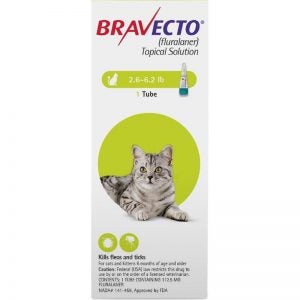
This flea treatment uses fluralaner to kill adult fleas before they have a chance to lay eggs. It can treat existing flea infestations and prevent future ones. Fluralaner works by inhibiting the flea’s nervous system and disrupts particular pathways, resulting in fatal seizures. It provides 12 weeks of protection against adult fleas.
Advantage II for Cats
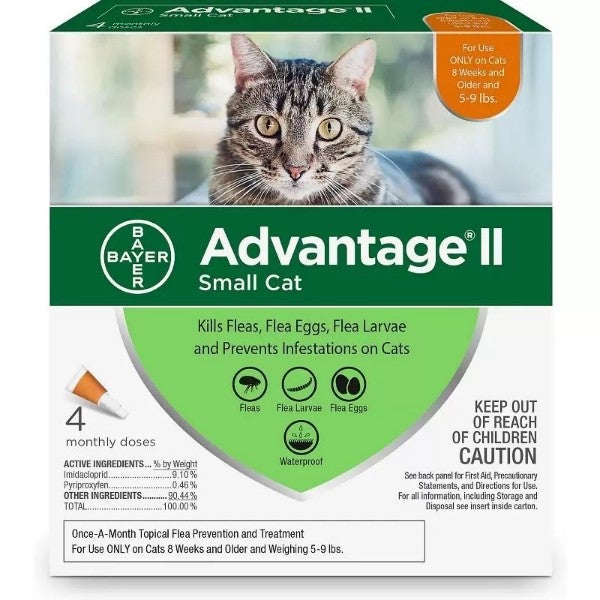
Two active ingredients offer flea protection for your cat: imidacloprid and pyriproxyfen. Imidacloprid damages the nervous systems of fleas, and they eventually die. Fleas do not need to bite your cat to be affected by it. Pyriproxyfen is an Insect Growth Regulator (IGR) and kills fleas before they develop into adults.
Revolution for Cats
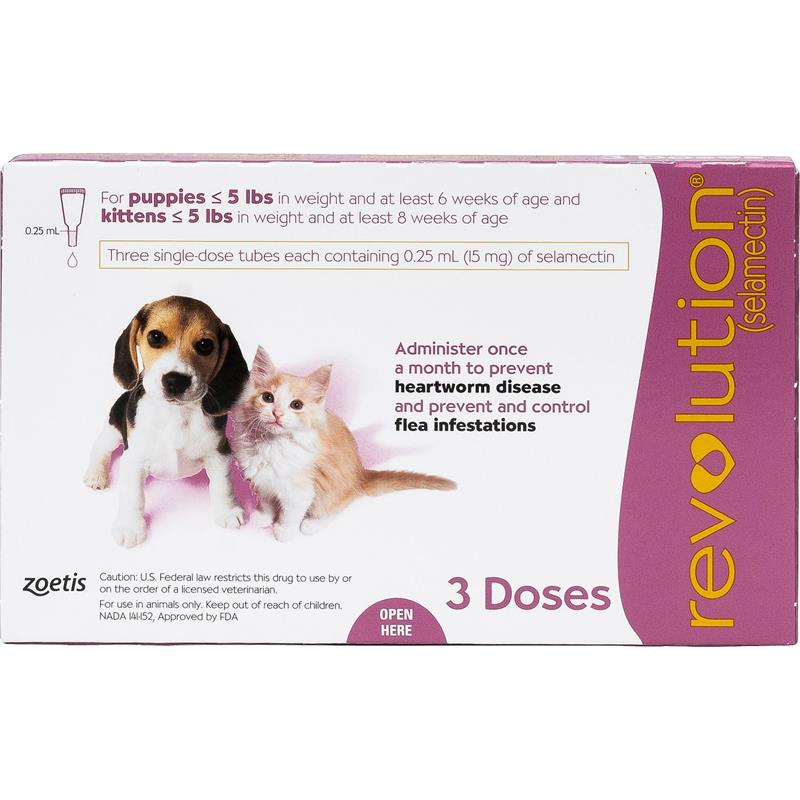
Its active ingredient is selamectin, which kills fleas and other parasites, including heartworms. It attacks the nervous system and causes paralysis that eventually causes death.
Flea Pills for Cats
Comfortis Chewable Tablets for Cats

Formulated with a taste cats will like, these chewable flea pills stimulate the nervous system of fleas, causing paralysis and death with a monthly dose.
Treating the Home for Fleas
Once you’ve given your cat flea control treatment, you’ll need to get rid of any eggs lurking in the corners and out-of-the-way areas of your home. Use these tips to help keep your home flea-free.
- Thoroughly clean your cat’s bedding, its surroundings, and anywhere your cat likes to sleep.
- When you vacuum, throw the vacuum cleaner bag out right away since it will contain fleas and eggs that may escape back into your home.
- Spray your lawn and other outdoor areas with an appropriate pesticide, following the instructions on the label.
- Keep your lawn and shrubs cut low to make them less attractive to fleas.
- Treat all pets in the household for fleas.
Safety Precautions with Flea Products
Carefully follow the packaging instructions for safe handling and disposal. It’s a good idea to read the instructions every time you use flea control products since the warnings or directions may have changed. If you have any questions about the instructions, ask your veterinarian or the manufacturer.
Wash your hands with soap and water immediately after handling and applying a spot-on treatment, or wear protective gloves when putting it on your cat. Store products away from food and items that may come into contact with you or a family member’s mouth. Keep all flea control products away from pets and children.
How Do Cats Get Fleas?
You may not be surprised to find fleas on an outdoor cat, but if your indoor cat gets fleas, you may wonder how that is possible. After all, if your cat never goes outside, how can they pick up fleas? Let’s take a look at how both outdoor and indoor cats get fleas.
Of course, if your cat is an outside cat, there are many opportunities for them to get fleas. Moist, shady areas, leaf piles, under shrubs, all the places an outdoor cat loves to hang out are also places where fleas love to hide. Outdoor cats can also get fleas from other animals that have fleas. This includes dogs, other cats, raccoons, and squirrels.
Adult fleas prefer warm-blooded hosts, but flea eggs fall into the environment where they hatch into larvae, molt into pupae, and become adult fleas. Once they mature into adults, the fleas are in the market for a new host where they can make their home. They hop on the first warm-blooded animal that comes by. Sometimes that warm-blooded animal is your cat.
Although it is harder for indoor cats to get fleas, don’t be fooled into thinking it can’t happen. Fleas are very persistent, and there are many ways they can find cats who never step a foot outside. They can easily catch a ride on other pets in your household who go outside regularly, like your dog. Indoor cats can also pick up fleas by sitting next to an open window. They can even manage to get a free ride into your home on your hair or clothing or that of visitors entering your home.
Once inside, they can infest your home in no time at all. It’s hard to believe that one flea can cause an infestation. When you consider that one female flea can lay as many as 50 eggs a day and 2,000 over her lifetime, you can see how easy it is for infestations to develop, often before you even realize it. That’s why, even if your cat is an indoor cat, you need still need flea control.
What are the Effects of Fleas on Cats?
Scratching, nibbling, and licking at the skin are usually the first noticeable effects of fleas on cats. You may even see the tiny brown insects scurrying through your cat’s fur. Cats have legendary grooming skills, so they will likely remove these pests before you see them. You are more likely to notice patches of hair loss, tiny scabs, and red, irritated skin due to your cat’s constant itching.
Flea Allergies (Allergic Dermatitis)
Some cats are allergic to flea saliva and develop allergic dermatitis when bitten. This is more common in cats five years of age or less, but it can develop at any age. The itching associated with flea bites is much worse and painful for cats who suffer from flea allergies. It can cause excessive hair loss and skin lesions. The best way to avoid this condition is to regularly treat your cat for fleas since it only takes one or two bites to cause a reaction.
Tapeworms
Tapeworms can be transmitted to your cat by fleas that have ingested tapeworm eggs. If your cat swallows an infected flea while grooming, the tapeworm hatches in your cat’s digestive tract. It then beings to lay eggs in your cat’s intestines, causing diarrhea and weight loss. If you see rice-like pieces in your cat’s feces, they may be tapeworm eggs. Tapeworms are easily treated by your veterinarian.
Kittens and Fleas
Since kittens are so small, blood loss due to fleas feasting on their blood can leave them anemic and weak. It is essential to talk to your veterinarian about flea control for your kitten since the majority of topical flea treatments and flea shampoos cannot be used on kittens less than eight weeks old.
Flea Control FAQ
Can I use my dog’s flea control medicine on my cat if they weigh the same?
No, never. A cat’s system processes these drugs differently, even if your cat and dog are the same weight. The ingredients and formulations are very different. If you have accidentally given your cat the wrong flea preventive, contact your veterinarian immediately, or take them to the nearest emergency veterinarian.
How long does it take for flea control in cats to work?
Fleas on your cat can begin to die within an hour or so of application, and the majority of fleas will be dead in 12 hours.
Can I give my cat a bath after applying topical flea control?
Wait about three days to give your cat a bath after applying flea control.
Can I give my cat an extra dose of flea medication?
No, follow the dosing directions on the label and do not double dose or half dose your cat.