
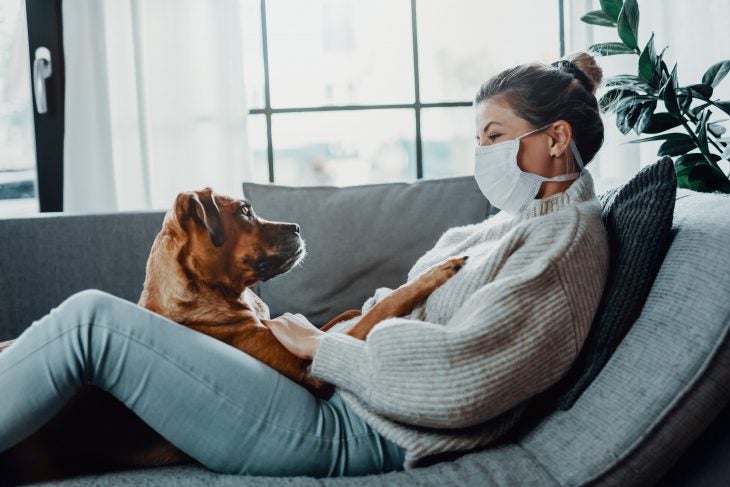
As talk of the Omicron variant continues to cause concern about COVID-19, pet owners are concerned with how the virus may affect their pets. While only a small number of pets have been infected, the risk does exist. Fortunately, the risk of animals spreading COVID-19 to humans is low.
Simple precautions can reduce the risk for your pet:
- If you test positive for COVID-19, quarantine in a place where you???re able to isolate yourself from other members of your household, including pets.
- If possible, have someone else care for your pets while you recover.
- If you must care for your pets while sick, wear a mask when interacting with them and wash your hands before and after you spend time in close contact with them.
Most of the pets who become infected with COVID-19 do so after close contact with their infected owners. Implementing the precautions above significantly reduces their risk.
How Will I Know if My Pet is Infected with COVID-19?
Many pets infected with COVID-19 do not exhibit any symptoms. When dogs or cats get sick from the virus, the symptoms are typically mild. It???s very rare for pets to experience severe illness from COVID-19.
Contact your vet if you suspect your pet may be ill with COVID-19, especially if the pet has been in close contact with a human who has the virus.
Potential symptoms include:
- Fever
- Coughing
- Difficulty breathing or shortness of breath
- Lethargy
- Sneezing
- Runny nose
- Eye discharge
- Vomiting
- Diarrhea
All of the above symptoms can also be signs of many other conditions, so they do not necessarily mean your pet has COVID-19. For pets that exhibit symptoms, pet owners can usually manage the symptoms at home.
If you have COVID-19, you will not be able to bring your pet to the vet???s office. However, your vet may be able to provide a tele-visit or offer needed advice over the phone.
It may be possible to complete diagnostic testing SARS-CoV-2, the virus that causes COVID-19. Your vet will let you know if this step is needed for your pet.
What If My Pet Tests Positive?
As mentioned above, most pets experience either no symptoms or mild symptoms. Still, if your pet tests positive, you???ll need to isolate your pet at home. Cats should remain indoors, and dogs should only go out to use the bathroom and should not mingle with other pets.
Monitor your pet???s symptoms and notify your vet immediately if you notice new or worsening symptoms.
You can end your pet???s isolation when:
- He hasn???t exhibited symptoms for 72 hours, and
- It???s been 14 days since the last positive COVID test
The COVID-19 virus can be passed from humans to pets upon close contact, but taking precautions as outlined above significantly reduces the risk.