
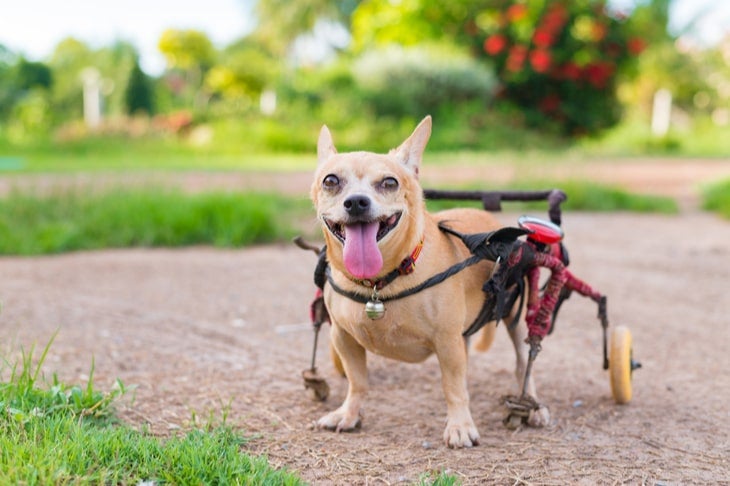
When your vet tells you that your dog needs a wheelchair, it can feel overwhelming. As beloved family members, we all want our dogs to have the best quality of life possible. Disabled dogs often don???t know they are different than other dogs and can easily adjust to almost any situation, including using a wheelchair.
What they do know is whether or not they can run, play, and enjoy life to its fullest. The good news is that these days, disabled dogs have every chance to live a happy and as ordinary life as possible, despite their condition. Due to the invention and continued improvements on dog wheelchairs, dogs can do almost everything you would expect of a healthy, active dog. You can easily find a small breed dog wheelchair and even large breed dog wheelchair sizes.
Long-Term Care for a Dogs
You must also take care of the affected body parts and other elements that affect your dog as a whole.
Diet
Proper nutrition is key to any dog???s quality of life and is especially important to a disabled or paralyzed dog???s longevity. Many chronic diseases and physical conditions can cause nutritional imbalances. Your veterinarian will give you advice about the best diet for your dog.
Keep in mind that a paralyzed dog may have other issues and should be fed to maintain overall health and wellness. For example, older dogs often have kidney problems that require a special diet low in phosphorus and protein, such as prescription Purina Pro Plan Veterinary Diets NF Kidney Function Formula. Keeping phosphorus and protein in balance is key to slowing the progression of this disease. Your vet may also suggest a supplement such as Epakitin to support kidney function.
In order to maintain your disabled dog???s quality of life, you???ll need to keep an eye on their weight. Extra pounds are especially problematic for dogs in wheelchairs since their unaffected legs may need to work harder, and excess weight can result in wear and tear on their joints. Your veterinarian may suggest a balanced, prescription food such as Purina Pro Plan Veterinary Diets OM Overweight Management Formula to make sure they get the nutrition they need and avoid extra calories they don???t need.
Monitor Their Bladder
Many paralyzed dogs have trouble urinating. Some may be unable to hold their urine, and it can unexpectedly leak out. Others may be unable to urinate on their own, and you may have to help them by expressing their bladder, usually about three times a day.
These dogs are prone to urinary tract infections (UTIs), which, while uncomfortable for any dog, can become life-threatening for disabled ones. A supplement such as NaturVet Cranberry Relief Healthy Urinary Tract Plus Echinacea can help prevent UTIs. You should clean the area around the urethra thoroughly also keep urine and feces away from your dog???s skin. Keep this area clean with VetCrafted Antiseptic Wipes ??? baby wipes can irritate your dog???s skin since their pH is different than human???s skin.
In addition, monitor your dog???s urine so you can stay on top of UTIs and take care of them as soon as possible. If the color or smell changes, it could be a sign there is a problem.
Take Care of Their Skin
When you bathe your dog, especially if frequent baths are required, use a shampoo formulated for allergic dogs, such as NaturVet Aller-911 Skin Care Shampoo. These shampoos do not destroy the protective lipid barrier and can be used more than once a week. You can also support and improve your dog???s skin by giving supplements such as Zesty Paws Hemp Elements Skin & Coat Supplement. Your veterinarian can advise you on supplements for your disabled dog.
Decubitus Ulcers (Bed Sores)
Bedsores form in areas of your dog???s body that protrude the most, such as ankles, hips, elbows, and the bones around the eyes. They form due to constant pressure on these areas and nutritional deficiencies caused by illness. To prevent them from forming, you must regularly move their limbs and change their position. Your veterinarian can give you instructions on what is required.
If sores form, you can help them heal by applying moisturizing Dermoscent ATOP 7 Hydra Cream or medicated products Silver Sulfadiazine 1% Cream.
Reasons Dogs Need Wheelchairs
Although some older dogs who tire easily may benefit from using a disabled dog wheelchair and regain their ability to go on longer walks, there are other reasons that dogs may need a wheelchair, such as:
Hip Dysplasia
Hip dysplasia often affects large breed dogs such as Newfoundland, Rottweilers, Saint Bernard, Great Danes, Chesapeake Bay Retriever, Labrador Retrievers, and German Shepherds. However, it can also develop in small breed dogs. The hips don???t develop correctly, which results in severe arthritis. Some dogs show signs as early as four months of age, while others develop it along with arthritis as they age. Although the overall incidence of hip dysplasia is slightly over 15%, it can be higher than 70% in some breeds.
Spinal Muscular Atrophy (SMA)
Symptoms of this hereditary condition include muscle wasting (atrophy) and weakness (skeletal muscles). The condition occurs due to a loss of motor neurons, the cells that control muscular movement.
Degenerative Myelopathy (DM)
This spinal cord illness cause weakening and paralysis in the dog???s hind limbs. The symptoms are caused by degeneration of the spinal cord???s white matter.
Intervertebral Disc Disease (IVDD)
A progressive, age-related degenerative condition, IVDD damages the spinal cord over time. The discs between the dog???s vertebrae that work as shock absorbers eventually harden until they no longer cushion the vertebrae.
Arthritis
This condition occurs mainly in senior dogs, causing stiffness, pain, and discomfort. The cartilage inside the joints is damaged or changes, causing the joint bones to rub together. New bone grows due to the increased rubbing, making it stiffer and affecting your dog???s mobility.
Other Diseases
Loss of mobility or the ability to walk can also be caused by spinal issues, knee injuries, amputation, paralysis, and surgical recovery.
How to Tell If Your Dog Needs a Wheelchair
If your dog has one of these conditions or trouble walking for any reason, your veterinarian will help you decide whether or not a wheelchair will improve their quality of life. They may advise you not to use a wheelchair in some instances, such as if your dog needs to improve muscle growth and strength after an injury.
However, a wheelchair is an ideal option for senior dogs, paralyzed dogs, or dogs with persistent injuries. Here are some signs that your dog needs a wheelchair:
- Sudden changes in behavior or irritation when moving or putting weight on their legs and joints
- Difficulty standing up
- Difficulty in balancing
- Hesitancy to leave the house
- Muscle weakness or atrophy
- Hesitation on stairs, slick surfaces, or uneven terrain
- Paralysis
If you notice any of these symptoms, speak with your veterinarian immediately to discuss a wheelchair for your dog.
Where to Buy Dog Wheelchair
If you are looking for the best dog wheelchair cart, check out Allivet. You will find dog wheelchairs and everything else you need to care for a disabled or paralyzed dog.