
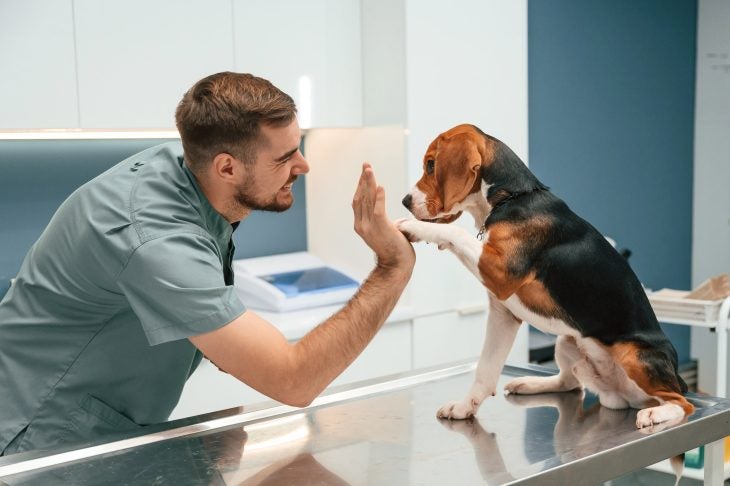
Veterinarian Shelby Neely explains the importance of routine vet visits.
You know if your pet could talk to you, they would insist they didn???t need to ever go to the vet. That is, until something actually hurts. Unfortunately, waiting until something hurts is not a good idea because dogs, and especially cats, are masters at hiding illness. This is why regular veterinary visits are so important. Compare it to your car. Think of wellness exams as routine maintenance, not emergency repairs. We all know how expensive those emergency repairs can be. It???s better for everyone involved to keep minor issues from turning into big, costly, and emotionally draining ones.
What counts as a regular vet visit?
The term most frequently used these days is “wellness visit???. The usual schedule recommended for these visits is:
- Puppies and kittens: initially every 3 to 4 weeks
- Healthy adult pets: once a year
- Senior pets (those over seven years of age): Every six months
The primary purpose of these visits is to focus on prevention, early detection, and comfort as they grow older. Annual visits used to be all about vaccines, and while vaccines are still necessary, we know now that there???s a lot more to be concerned about.
What vets are actually checking (it???s more than you think)
As you watch your vet examine your pet, it may just look like a quick head-to-tail pat down. But that couldn???t be further from the truth. It is a full-body, thorough assessment. The vet is actually evaluating:
- Weight and body condition
- Heart and lung sounds
- Teeth, gums, and oral pain
- Skin, coat, and ears
- Joint mobility and muscle tone
- Behavior and cognitive changes
- Abdomen (organs, masses, discomfort)
- Eyes (signs of glaucoma or early cataracts)
As you can see, your vet is evaluating things that you couldn???t possibly know just from looking at your pet at home.
Why regular vet visits are so important
Preventive care is a better option than an emergency
Key benefits include:
- Earlier detection of diseases (kidney disease, diabetes, heart disease, cancer)
- Better pain management, especially critical as your pet ages and is likely to develop arthritis
- Longer life expectancy and improved quality of life
- Lower care expenses than emergency costs
- Nutrition and lifestyle advice, such as whether your pet would benefit from veterinary diet food.
Early detection of a problem can lead to early treatment, improving the outlook.
Vaccines, parasites, and other boring, but critical stuff
During a wellness visit, vets review parasite prevention and the necessary vaccines to protect against infectious diseases. These days, heartworm and flea and tick prevention is needed year-round due to climate change. A typical discussion with your vet will include:
- Core and optional vaccines
- Flea, tick, and heartworm prevention
- Intestinal parasite screening
- Zoonotic disease risks (diseases that can be transferred from pets to humans)
It???s not exciting, but it???s much better to prevent than to treat.
Senior Pets: where vet visits really shine
As your cat or dog ages, you may notice your pet ???slowing down,??? but you dismiss it because you think it???s normal. However, that can actually be pain. Or they???re ???picky???, but that could be nausea. The ???clumsiness??? might be neurologic. The senior wellness visits can tell the difference. They often include:
Bloodwork and urine testing
Blood pressure checks
Cognitive mobility screening
Medication reviews
These visits aren???t just about helping your pet live longer, although we all want that, but they are also about comfort.
Common reasons pet parents skip vet visits
Let???s be honest. Most of us have used one or more of these excuses at some point. Common ones include:
- I can???t get him in the carrier
- My pet seems fine
- My cat hates to go to the vet
- I???ll go if something comes up and he needs it
- It???s too expensive just to have preventative appointments
As a reminder, pets don???t complain. They tend to mask problems until they???re pronounced.
How regular vet visits help pet parents, too
There are benefits for you, not just for your pet. A wellness visit gives you:
- The reassurance that you???re doing things the right way
- A chance to ask questions
- Information tailored to your pets, not just Google search information
- A relationship with a vet who knows your pet before an emergency occurs
Rest assured that having your vet know your pet is priceless in an emergency.
Bottom Line
One of the most important investments you can make in your pet’s health is scheduling regular vet visits. You can catch problems early, reduce discomfort, help extend your pet’s life, and keep them more comfortable. Plus, these visits will give you peace of mind, which is also very valuable.
Dr. Shelby Neely is a Penn graduate who works for Banfield Pet Hospital. When she???s not treating pets, she also works as a freelance writer. Before joining Banfield, Dr. Neely owned a very successful feline-only practice. She was also the creator and author of the award-winning Ask The Cat Doctor website. Dr. Neely considers her three successful children and her veterinary career her most significant achievements. She lives in King of Prussia with her two adorable cats and loves to visit her four granddogs.