
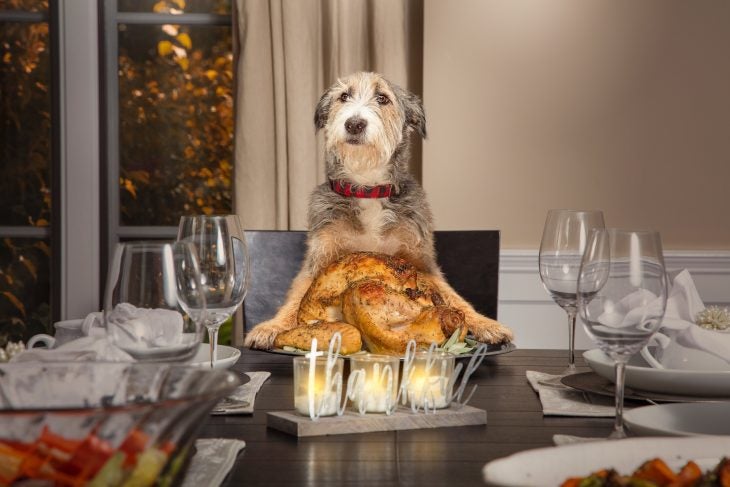
Veterinarian Shelby Neely loves celebrating the holidays with her entire family, including the four-legged family members! In her latest blog, she outlines how to safely share your holiday feast with your pets.
For many people, the holidays are all about family and gratitude, but also food. A special meal is a part of most holiday get-togethers. If you have a pet that you consider family, it???s natural that you have the urge to include them in your feast.
While it???s tempting to slip your dog or cat a little taste from the table, a safer method is to prepare a pet plate just for them. That???s because some foods can be safely shared, while others can cause serious harm.
Let???s take a look at which holiday favorites your pets can enjoy and which ones are strictly off the menu.
Safe Holiday Foods for Pets (in Moderation)
When it comes to sharing, think small portions and simple preparation. Skip the butter, salt, spices, and sauces ??? those extras can upset your pet???s stomach or worse.
Turkey (without skin or bones)
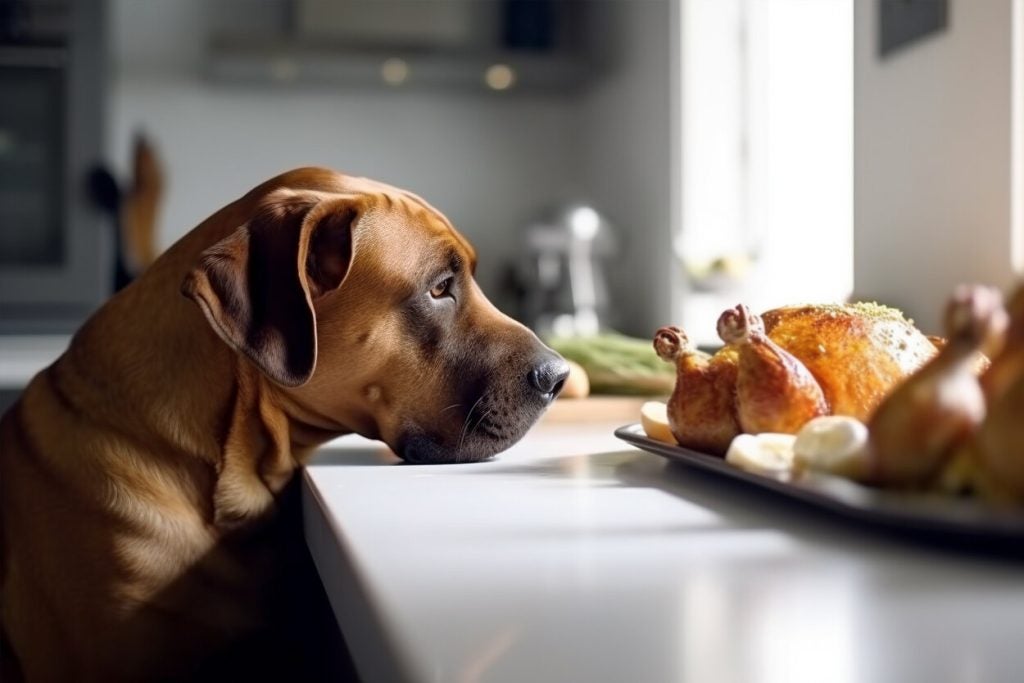
If you avoid seasoned skin, bones, and gravy, plain, cooked turkey breast is great for dogs and cats. Turkey bones can be dangerous due to splintering, which can cause choking or intestinal lacerations. Rich gravy can lead to pancreatitis. However, plain, cooked turkey breast is a healthy source of lean protein for dogs and cats.
Pumpkin
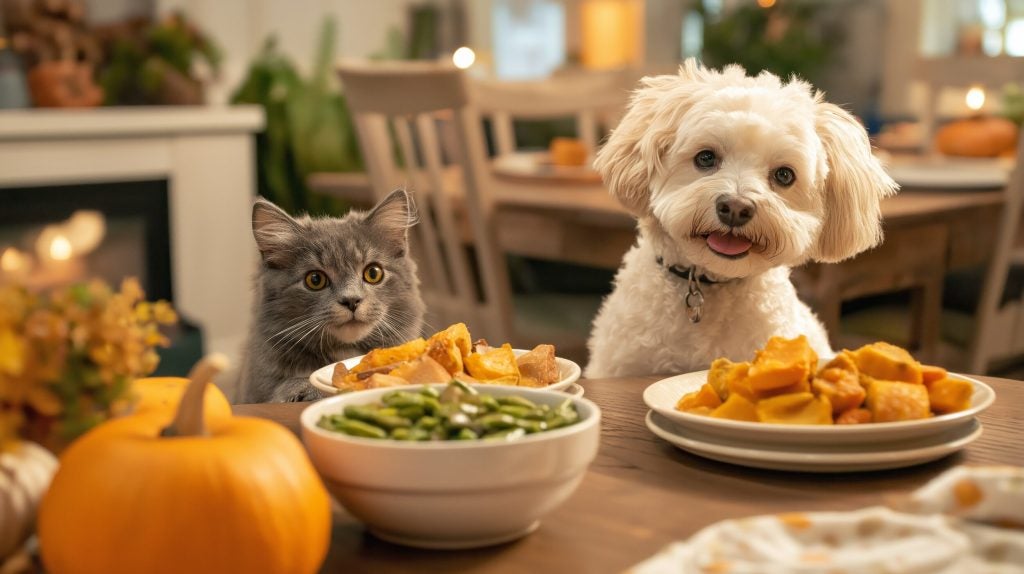
Pumpkin, fresh or canned, but not pumpkin pie filling, is great for pets when plain and unseasoned. It???s rich in fiber and can support healthy digestion. Veterinarians even use it for both constipation and diarrhea. A spoonful added to your pet???s food is a safe, tasty treat.
Green Beans
Most dogs love green beans, but not necessarily cats. Plain steamed or boiled green beans, without butter or onions, or in casseroles, are a low-calorie snack packed with vitamins.
Sweet Potatoes
Cooked sweet potatoes are rich in fiber and beta carotene, supporting eye and immune health. Do not add sugar, butter, or marshmallows.
Apples
Want to add a dessert? Apples are a crunchy, naturally sweet treat your pets can enjoy in small amounts. Avoid the core and seeds. The seeds actually contain cyanide.
Cranberries
You can also offer cranberries to your pets as part of their meal or dessert. Just as in humans, cranberries may help with urinary problems. Don???t, however, feed cranberry sauce that has too much sugar or even alcohol.
Foods That Should Never Be Shared with Pets
While there are several other staples on most holiday tables, some are dangerous for your pets.
Stuffing and Gravy
Stuffing usually contains onions, garlic, scallions, or leeks, none of which are safe for dogs and cats. Gravy often contains butter, salt, and fat drippings that can trigger vomiting, diarrhea, or pancreatitis.
Onions and Garlic
Even small amounts of onion or garlic in any form can cause toxic effects in pets.
Chocolate and Desserts
A year-round danger, chocolate is very dangerous to both cats and dogs. The darker the chocolate and the greater the amount, the more toxic it is. Many desserts also contain the sugar substitute, xylitol, which is life-threatening.
Grapes and Raisins
Even in tiny amounts, these can cause kidney failure in dogs.
Alcohol
Even a small sip of wine, beer, or liquor can cause serious health problems for pets. Keep your glasses out of reach.
Fatty or Greasy Foods
Rich foods like turkey skin, buttery mashed potatoes, or cheesy casseroles can cause gastrointestinal upset or pancreatitis, especially in dogs prone to these conditions.
Bones and Skewers
Cooked poultry bones are brittle and can splinter when chewed, leading to choking or internal punctures. Keep the trash out of reach.
Everyone loves turkey…
Tips for a Pet-Friendly Holiday Feast
Make a ???pet plate.???
Prepare a small dish of safe holiday items just for your dog or cat.
Keep leftovers secured.
Pets are masters of scavenging. Dispose of bones, fatty scraps, and desserts in a covered trash can or take the garbage outside immediately.
Inform guests.
Tell visitors not to share table scraps or leave plates within reach of curious paws.
Don???t overdo it.
Too many rich or unfamiliar foods can cause digestive upset.
Watch for warning signs.
Watch for vomiting, diarrhea, weakness, tremors, or restlessness.
Celebrating with your pets can make the holidays even more joyful, but safety comes first. Share a few plain, pet-friendly bites and have a happy, healthy holiday season!
??…and pie!
Dr. Shelby Neely??is a Penn graduate who works for Banfield Pet Hospital. When she???s not treating pets, she also works as a freelance writer. Before joining Banfield, Dr. Neely owned??a very successful feline-only practice. She was also the creator and??author of the award-winning??Ask The Cat Doctor??website. Dr. Neely considers her three successful children and her veterinary career her??most significant achievements. She lives in King of Prussia with her two adorable cats and loves to visit her four granddogs.