
by Shelby Neely, DVM
You may recently have heard that New World screwworm has been confirmed in animal populations in the United States for the first time in over 50 years. On June 3, 2026, the USDA confirmed an infestation of New World screwworm in a young calf in Texas.
The good news is that the United States is well-positioned to eliminate New World screwworm again. It’s very preventable and treatable when caught early. However, risk is entirely dependent on how pet lovers treat their animals’ wounds.
What Is New World Screwworm? A Fly, Not a Worm
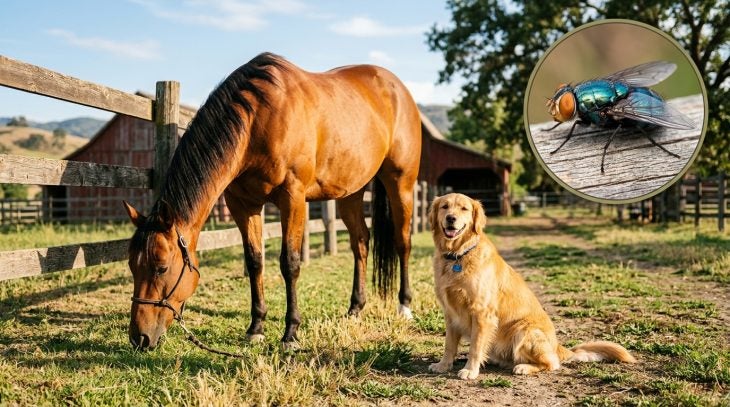
The New World screwworm (Cochliomyia hominivorax) is a parasitic fly, not a worm. It is slightly larger than a housefly, with a distinctive metallic blue-green body and orange eyes. It is most dangerous in its larval form.
Female screwworm flies lay their eggs—200–300 at a time—along the edges of wounds, even minor ones. The eggs are recognized by their creamy white color and are usually arranged in a shingle-like pattern. It takes less than a day for these eggs to hatch.
Why New World Screwworm Is Different From Ordinary Maggots
People usually think of maggots as feeding on dead tissue, which does not worsen wounds. However, screwworm larvae feed on living flesh near the wound.
They get their name from the screwing motion they make with their hooked mouths to burrow deeper and deeper into the flesh. While feeding, they release fluids that attract even more flies to the site.
Within days, even a minor scratch can turn into a deep and expanding lesion. Untreated screwworm infestations can be fatal, turning a minor wound into a life-ending emergency.
New World Screwworm in the United States: Where the Outbreak Stands
From Eradication to Return
The United States successfully eradicated screwworm in 1966 through sterilization. Since then, screwworm has been contained to Panama and southern regions. A small outbreak occurred in the Florida Keys deer population in 2016 and 2017 but was easily contained.
In 2023, the rate of cases in Panama skyrocketed from around 25 annually to nearly 7,000. Since then, the pest has moved north through Central America and Mexico, reaching the U.S. border region as of 2026.
Which Animals Are at Risk for New World Screwworm?
Any wounded warm-blooded animal is a potential host for New World screwworm. Risk depends on a wound and environment, not species.
| Species | Most Common Entry Points | Risk Level |
| Cattle | Umbilical stumps in newborn calves, castration and dehorning sites, ear tag holes, tick bites | Very high |
| Sheep and goats | Shearing nicks, docking and castration wounds, footrot lesions, birthing tissue | Very high |
| Horses | Lacerations, hoof and lower limb injuries, surgical sites, insect bites | High |
| Dogs | Bite wounds, ear tips, surgical incisions, hot spots, torn nails | Moderate to high |
| Cats | Abscesses and bite wounds, ear tips, surgical incisions | Moderate |
| Wildlife and feral animals | Fight injuries, birthing wounds, antler velvet damage | High, and hard to monitor |
| Birds | Rare, but possible through open wounds | Low |
Why Wounds Are the Common Thread in Screwworm Infestations
People falsely assume a screwworm infestation requires a large wound. Entry wounds may include:
- The first Texas calf was infected via the umbilical cord
- Tick and fly bites, especially if continually bothered
- Ear tag and ear notch sites
- Surgical incisions, including routine spay and neuter sites
- Scratches from brush, wire, or fencing
- Open sores near the birth canal after birthing
- Cracked or irritated skin
New World Screwworm Symptoms and Warning Signs
Signs of Screwworm in an Animal
- Withdrawing from the household or other animals
- Restlessness, head shaking, or repeated attention to one body area
- Appetite and weight loss
- Lethargy or apparent depression
- Discomfort around the wound site
What Does a Screwworm Wound Look Like?
- Clusters of creamy white eggs along the wound margins, laid in an overlapping pattern
- Larvae partially buried in the tissue that look like pale, wriggling bodies
- A distinctive foul odor
- Swelling and tissue that appears to be tunneling or pocketing
- Larvae that burrow deeper rather than fleeing when disturbed
A deteriorating wound is the number one sign of screwworm. Ordinary wounds shrink, dry and close. A screwworm wound expands and drains persistently.
Protecting Dogs, Cats and Other Companion Animals From Screwworm
Wound Care and Daily Checks
- Clean and treat every break in the skin promptly
- Cover or bandage wounds when practical
- Check ears, paws and skin folds during daily handling or grooming
- Watch surgical sites closely for the full recovery period
- Keep pets indoors while a fresh wound or incision is healing
Year-Round Parasite Prevention
Isoxazoline products, which many pets already receive for fleas and ticks, also protect against screwworm. Consistent, year-round parasite prevention is the simplest protection a pet parent can offer. Confirm whether your pet’s preventative includes protection against screwworm.
Travel and Transport Precautions
- Inspect pets carefully before and after travel to or from affected regions
- Have any wound examined before boarding, kenneling or transporting an animal
- Health certificates may be required for transporting a rescue or shelter animal from an affected region
Protecting Livestock and Working Animals From Screwworm
Time Procedures Around Fly Activity
Screwworm flies thrive in sustained warm weather but are active between 60°F and 80°F. When possible, schedule surgeries and incisions—such as castration, dehorning, branding and ear tagging—for the fall and winter months. Otherwise, treat the site and monitor it daily until fully healed.
Birthing and Newborn Protocols
- Treat and monitor umbilical stumps on every newborn
- Examine for vulva and tissue trauma after birthing
- Increase inspection frequency during calving, lambing and kidding season
- Observe birthing animals closely before and after
Herd Inspection and Recordkeeping
- Inspect animals at least weekly during warm months
- Focus on the head, ears, navel, genitals and lower limbs
- Track any animal with a known wound until the wound has closed
- Keep movement records and required inspection certificates current
What to Do If You Suspect New World Screwworm
Suspected screwworm cases must be reported, and the response is coordinated rather than left to individual owners.
Steps to Take Immediately
- Do not discard the larvae. Keep several in a container with rubbing alcohol for identification.
- Do not attempt to treat the wound yourself; seek professional care.
- Isolate the animal from others if it is safe to do so.
- Photograph the wound for documentation.
- Contact your veterinarian right away.
Who to Contact About a Suspected Screwworm Infestation
- Your veterinarian
- Your state animal health official
- The APHIS Area Veterinarian in Charge for your state
Treatments have evolved rapidly over the last few years. Caught early, screwworm infestations respond well to treatment.
New World Screwworm Prevention: The Bottom Line
The return of New World screwworm in the United States is serious, but it’s nothing new, and effective treatment strategies are commonplace. Prevention and early detection remain key.
Check and treat every wound. During warmer weather and in affected regions, check your pets and animals regularly and thoroughly. Remain consistent with year-round prevention, and always seek veterinarian guidance if a wound continues to look worse instead of getting better.
When your vet recommends medications or preventatives to keep on hand, you’ll find them here at Allivet.
Our selection includes:
Dr. Shelby Neely is a Penn graduate who works for Banfield Pet Hospital. When she’s not treating pets, she also works as a freelance writer. Before joining Banfield, Dr. Neely owned a very successful feline-only practice. She was also the creator and author of the award-winning Ask The Cat Doctor website. Dr. Neely considers her three successful children and her veterinary career her most significant achievements. She lives in King of Prussia with her two adorable cats and loves to visit her four granddogs.